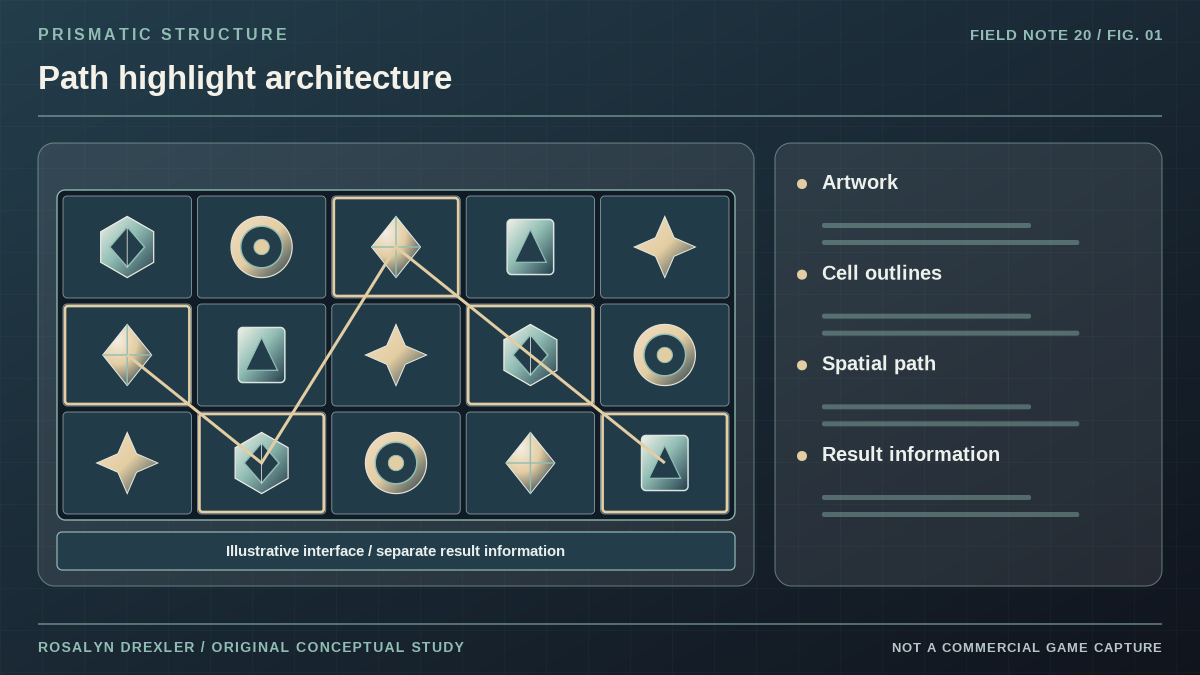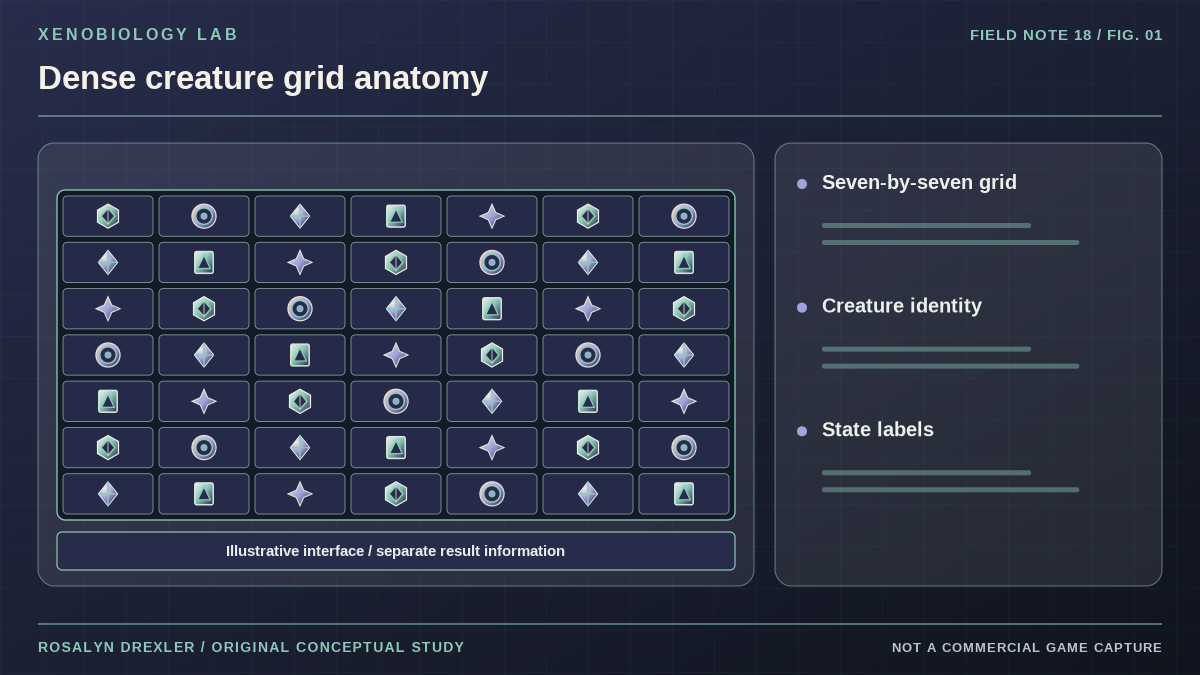
Reactoonz by Play'n GO provides a distinctive case for studying a dense character-based grid and cluster feedback. The original title uses a seven-by-seven arrangement of illustrated creatures, creating different visual relationships from a conventional reel composition. This Reactoonz slot UI design case study examines cell scale, creature differentiation, cluster boundaries, follow-on transitions and mobile readability. The original Xenobiology Lab illustrations are fictional design studies, not Play'n GO screenshots or traced character assets.
Grid composition and symbol differentiation
A seven-by-seven grid creates forty-nine visible positions. Its density makes the relationship between recognizable individual objects and the complete composition particularly important. Character artwork may contain expressive faces, multiple colors and irregular contours. The regular cell structure provides a spatial reference for interpreting these varied objects. A complete audit should inspect actual rendered dimensions and representative changing states.
Cell scale, creature silhouettes and contrast
Cell scale. A dense arrangement reduces the area available to each illustrated object. Inspect the smallest supported creature rendering, its contour and the visibility of internal identifiers. A source illustration can be expressive at large size while losing distinctions within a narrow viewport. The design should preserve the association between an object and its actual position.
Creature silhouettes. Different ear shapes, body proportions and facial characteristics can support recognition independently of color. A silhouette comparison helps identify objects that become visually similar at reduced dimensions. The Xenobiology Lab contact sheet uses independently drawn creatures to illustrate this method. It does not establish measured recognition of the original Reactoonz artwork.
Contrast. Character color, background surfaces and decorative effects can compete within a dense grid. Evaluate actual foreground and background relationships. A highlight should not obscure the recognizable identity of the object it describes. Explicit state indicators should remain available when hue or decorative movement is reduced. Static art is only one part of the complete readability review.
A dense-grid inspection method. Record the actual grid dimensions and the rendered size of representative creature objects. Compare the same artwork in a source-size view, an actual interface-size view and a simplified contour view. Keep the relevant proportions and camera angle consistent. A seven-by-seven composition introduces many neighboring visual relationships, so an isolated character sheet is not sufficient to establish contextual recognition. Inspect whether each object remains distinguishable from nearby creatures, cell boundaries and temporary effects.
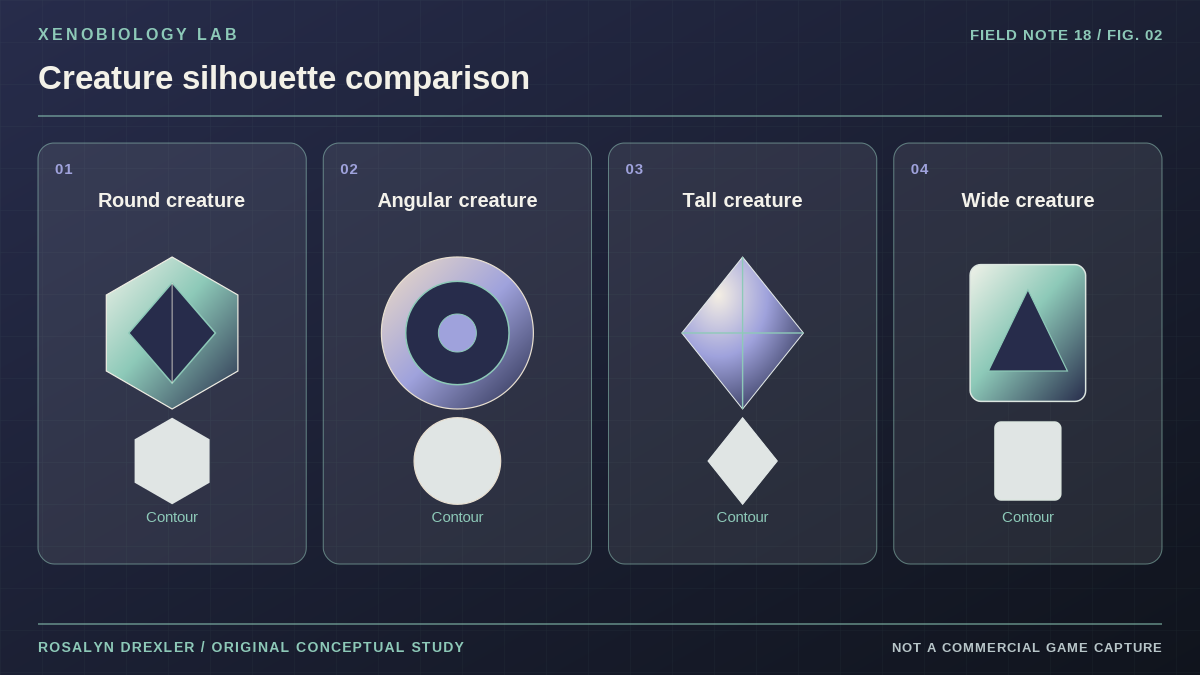
A useful annotation can identify the character contour, internal facial features and relevant functional marker separately. If two creatures become difficult to distinguish at a smaller rendering, determine whether the ambiguity concerns their silhouette, color, internal detail or surrounding composition. These are different production questions. The original Xenobiology Lab illustrations demonstrate the inspection method using independently drawn geometric creatures. They should not be interpreted as evidence of measured recognition of the commercial Reactoonz assets.
Communicating clusters and follow-on cascades
Cluster feedback identifies a spatial group of related objects rather than simply tracing a continuous line. The group's boundary, individual members and relationship to neighboring positions should remain understandable. Follow-on transitions introduce further requirements for spatial continuity and established information. These visual questions can be studied independently of the game's financial mechanics.
Highlight sequence, removed symbols and state changes
Highlight sequence. An established group should be distinguishable from unrelated objects. A broad illumination effect can communicate an area of emphasis without clearly identifying membership. A boundary or explicit marker can provide additional information. The general distinction between line and cluster presentation is examined in slot win visualization design.
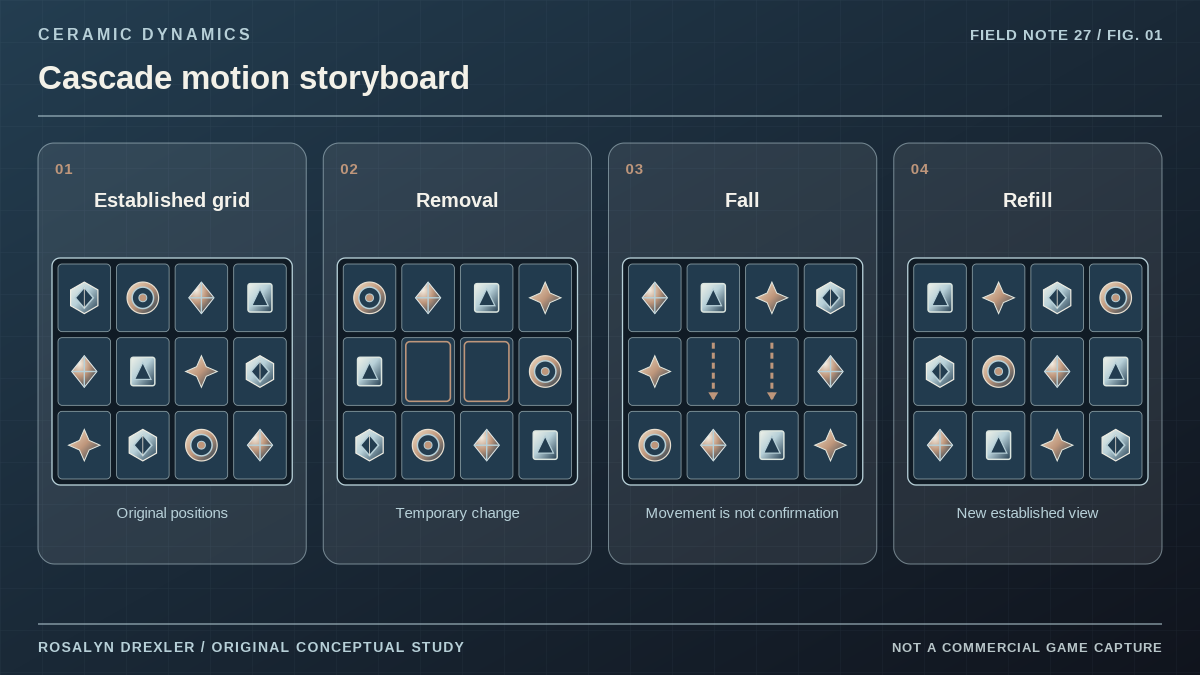
Removed objects. When the presentation changes, the interface should distinguish the original group, temporary gaps and subsequent arrangement. Decorative fragmentation should not make unrelated neighboring objects appear to have been removed. Established information must remain accessible after motion concludes. The original storyboard represents analytical phases, not captured Reactoonz frames.
State changes. A transition may change the displayed arrangement while contextual information remains persistent. An updating counter should have an explicit scope and meaning. Visual completion is not independently sufficient evidence of system confirmation. See cascading reels animation design for a broader motion framework. Exact animation timing and counter behavior require direct client inspection.
Group membership and spatial boundaries. An established cluster can occupy an irregular arrangement. A graphical treatment that emphasizes a broad region may make the general area visible without identifying the precise objects that belong to it. Review the group boundary against the actual positions and neighboring objects. Use the established information as the reference, not the shape or intensity of an optional light effect. The same distinction applies if several visual groups are presented during a sequence.
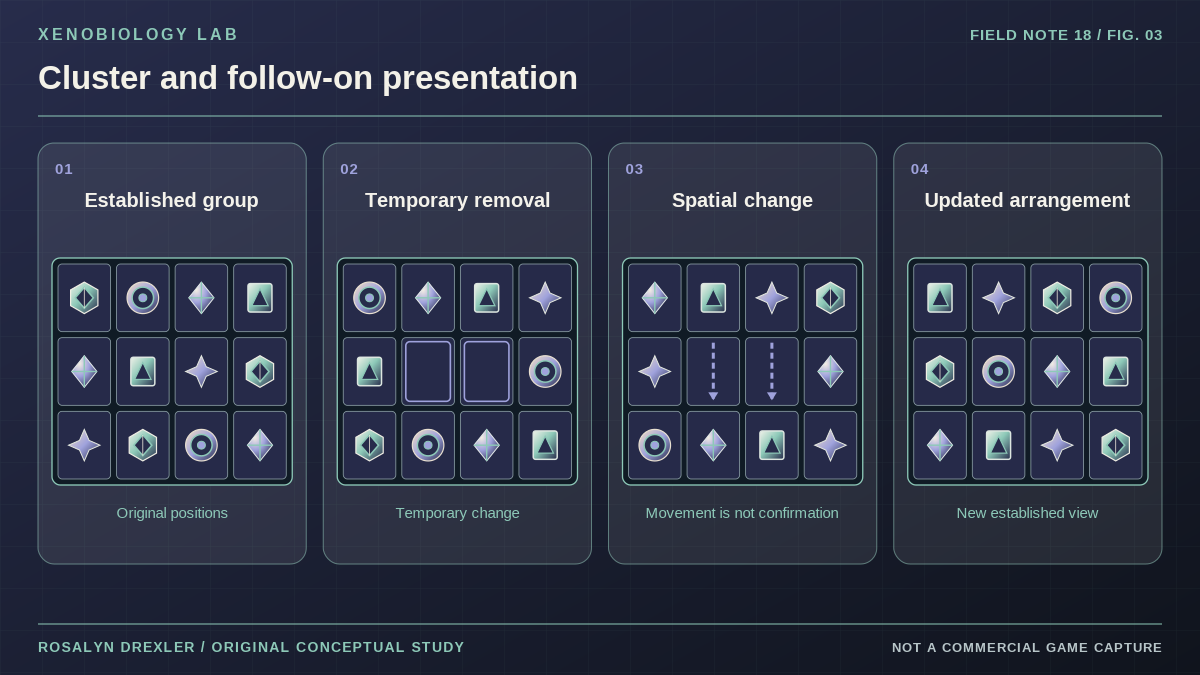
A paired review can show the original arrangement and the subsequent changing presentation. Identify the objects whose established state has changed, the temporary gaps and the positions that remain recognizable. A decorative fragment or motion effect should not make unrelated neighboring objects appear to belong to the removed group. When the new arrangement is established, its displayed information should correspond to the actual system condition. The conceptual storyboard illustrates these visual distinctions but does not reproduce the exact Reactoonz animation behavior.
Contextual numerical information also deserves an independent review. A counter may describe a particular documented condition rather than the complete financial outcome. Its label and scope should remain understandable during changing arrangements. If the displayed value is temporarily unavailable, the interface should identify its status rather than imply a definitive update through animation alone. Record the actual visible information when reviewing a representative sequence.
UX critique for busy grid interfaces
Dense interfaces require a careful distinction between expressive art and information-bearing effects. Several changing objects, contextual indicators and character-related graphics may coexist in the same composition. A static image can establish the visual theme, but cannot establish comprehension, accessibility or technical performance across all states.
Mobile legibility, motion pacing and visual noise
Mobile legibility. Compare actual portrait and landscape states using representative device sizes and supported text settings. Inspect creature recognition, group boundaries, financial labels and reference navigation. A smaller display may require reorganizing contextual information rather than reducing the complete composition proportionally. The fictional mobile contact sheet illustrates proposed review scenarios only.
Motion pacing. Evaluate the relationship between a highlighted group, changing objects and subsequent established information. Essential meaning should not depend on watching a complete decorative animation. A reduced-motion alternative should preserve recognizable objects and explicit status information. Record actual frames and device conditions before assigning numerical timing or performance claims.
Visual noise and evidence. Inspect overlapping highlights, decorative particles, character movement and contextual displays at actual sizes. Determine whether unrelated objects or labels become ambiguous. Document the client version, viewport, language, presentation state and supporting evidence. The official product description supports the thematic and grid context, but does not establish the complete behavior of every responsive or accessibility state.
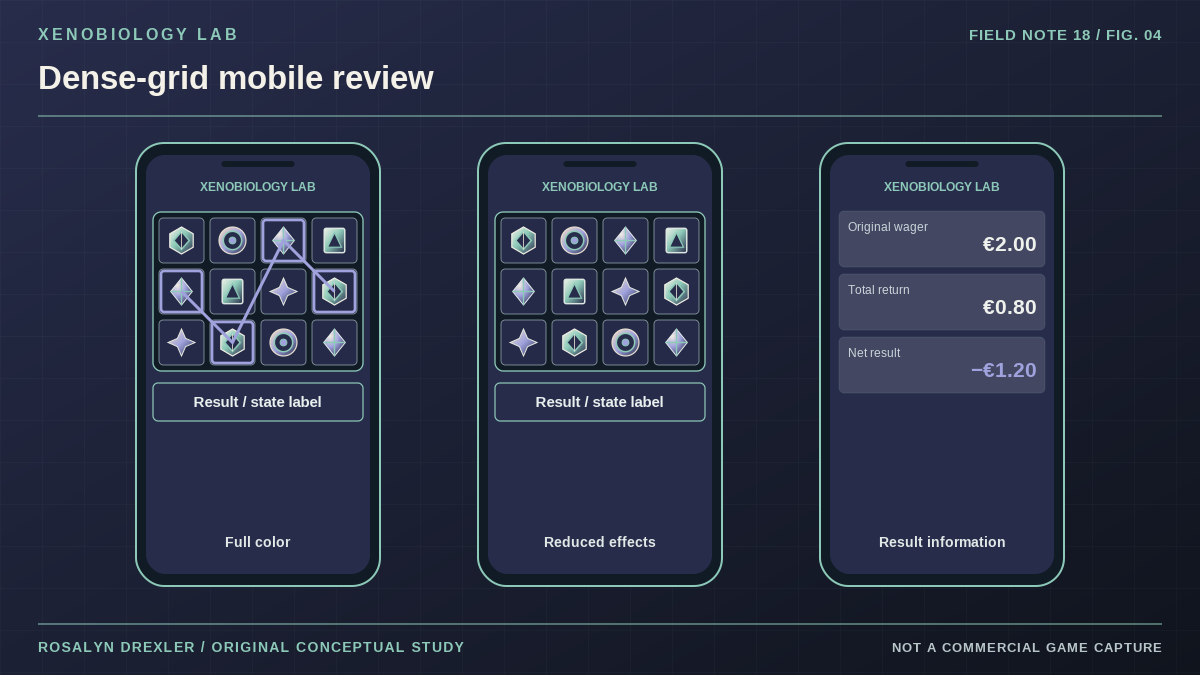
A mobile and motion capture protocol. Capture representative ordinary and changing arrangements in the supported landscape and portrait layouts. Record the client version, viewport, device, language and presentation settings. Compare the actual object dimensions, group boundaries, contextual indicators and financial labels. Inspect the same established information with supported alternative motion and audio settings. A visually expressive desktop composition may introduce different relationships on a narrow screen, but this cannot be established from a fictional mobile mockup.
An issue report should identify the precise affected information. A creature whose contour becomes difficult to distinguish in one supported size raises a different question from a group boundary that appears to include an unrelated position. A counter hidden by decorative movement presents another type of problem. Record the actual state and supporting evidence so the appropriate design or integration requirement can be revised. Avoid converting these observations into unmeasured claims about user comprehension or technical performance.
The completed case study should distinguish the product characteristics established by official documentation, the visual observations supported by actual captures and the proposed requirements for further testing. This evidence structure is particularly important for a dense, animated interface because a single screenshot cannot establish the behavior of every transition. The current article provides a conceptual review framework. A stronger empirical assessment would add representative recorded states and direct accessibility inspection while preserving the distinction between original illustrations and commercial assets.
Reference sheet for the dense grid. Include a full-grid capture, a magnified crop of the smallest representative creature, and a marked outline of an established group. Record the exact display dimensions and distinguish the marked analytical overlay from the original capture. This combination connects the individual asset review to the complete spatial composition and provides a reproducible visual reference for discussions between illustration, motion design and interface QA teams.
The transferable lesson of Reactoonz is the relationship between dense character artwork and spatial grouping. A coherent cluster interface needs recognizable individual objects, explicit group membership and continuous information across changing layouts. Further client testing is required to establish the actual performance and accessibility of the commercial implementation.
Official reference material
This article uses public product documentation as reference context. Illustrations are independent conceptual studies. Interactive client testing, measured performance and accessibility compliance are not established by this material.
Practical design QA checklist
Use this checklist as a review framework; it does not certify accessibility, performance or compliance.