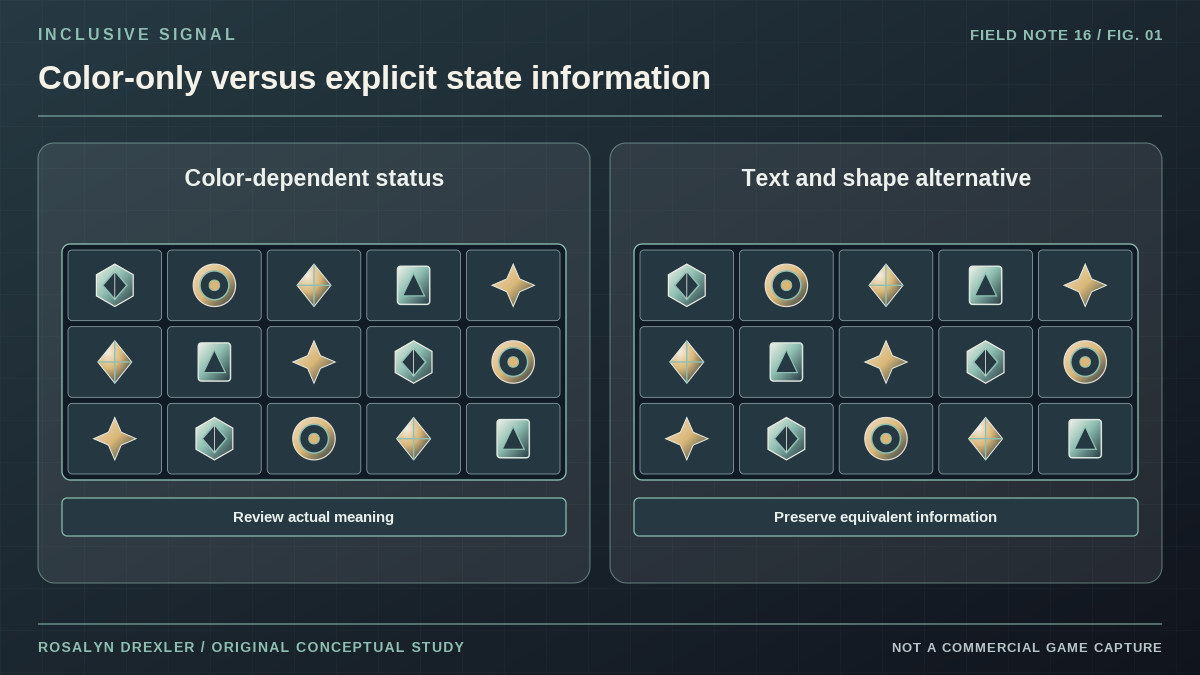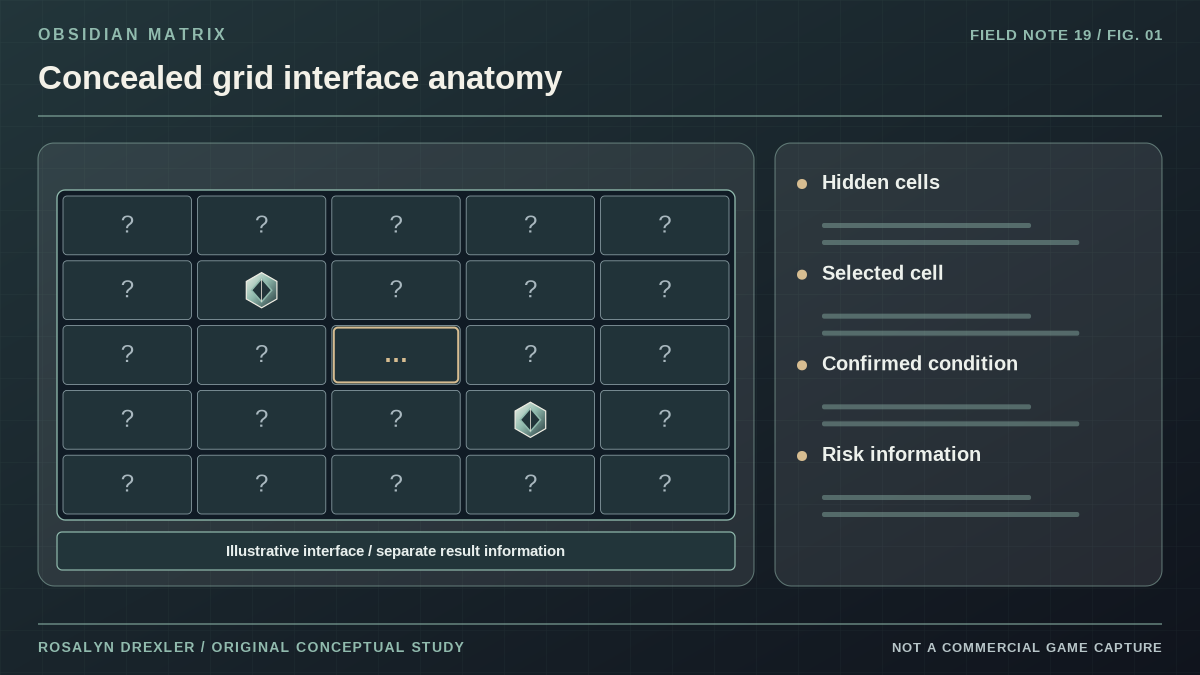
Mines game UX design presents a distinctive interface challenge because its central interaction model is based on selecting individual positions within a grid of concealed objects. Unlike traditional reel-based interfaces, the grid itself functions as an interactive surface rather than exclusively as a presentation area. Individual cells can have different visual and functional states, while surrounding interface components communicate financial information, contextual conditions, and available actions.
The relationship between concealed information and confirmed results is particularly important in this type of interface. A visually ambiguous cell may leave uncertainty about whether it has been selected, whether its information remains hidden, or whether an outcome has already been established. Similarly, decorative effects can create misleading impressions if they suggest that an unrevealed position is safer than another without supporting information.
Effective interface design therefore requires a clear distinction between available interactions, pending states, confirmed cell information, and completed financial outcomes. This article examines the Mines interaction loop, grid-state architecture, outcome feedback, transparent risk communication, and accessible controls. All visual examples belong to the original fictional interface concept Obsidian Matrix. They illustrate UX principles rather than a playable game, winning strategy, or probability model.
The Mines game interaction loop
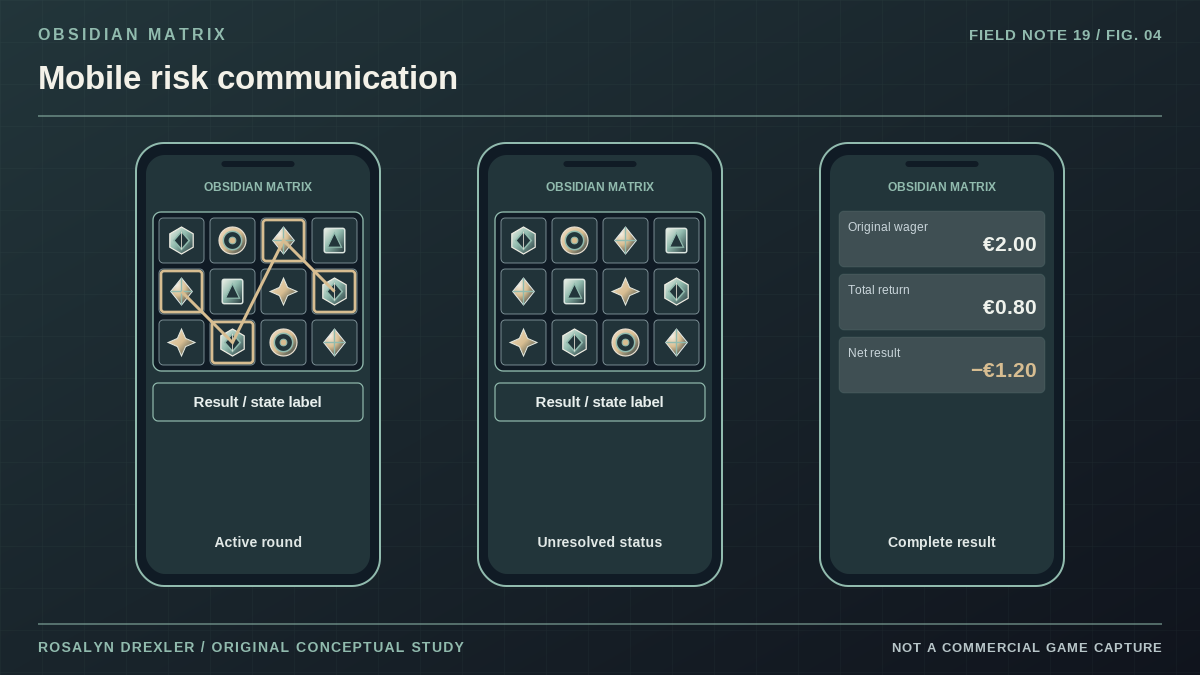
A Mines interface can be examined as a sequence of documented interaction states. The initial interface communicates configurable conditions and relevant financial information. During an active round, the grid presents concealed and established cell states. At the conclusion of the round, the interface communicates the confirmed outcome.
These conditions should remain distinguishable through explicit interface information rather than decorative changes alone. An important design requirement is separating the visual presentation of an interaction from its actual system status. A cell may appear visually selected while the corresponding request remains unresolved. Conversely, confirmed information should remain identifiable if its decorative reveal animation is interrupted. This distinction provides a foundation for documenting the interaction architecture.
Bet setup, cell selection and round end
Bet setup and configuration. The initial presentation should communicate the current amount setting, selected configuration, applicable rules, and relevant financial information. Configurable values should remain distinguishable from confirmed transactions. Changing an interface setting does not necessarily mean that a financial action has been submitted or completed. The interface should also explain the implications of its configuration without using misleading labels that suggest particular conditions are free from risk.
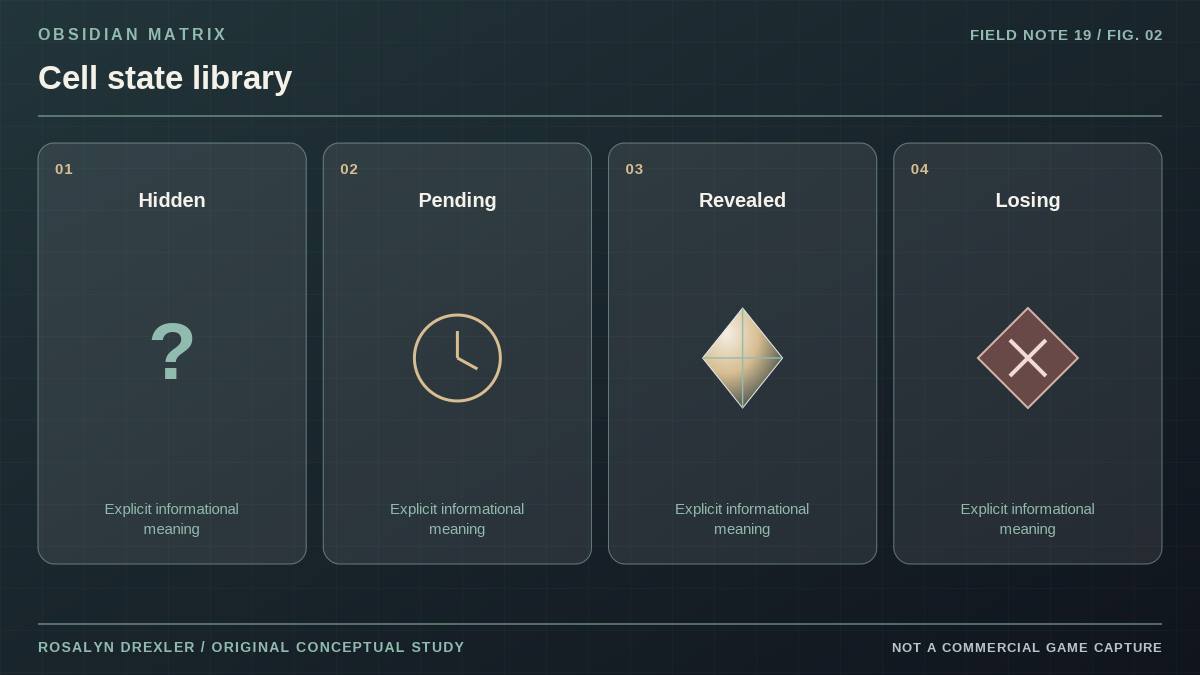
Cell selection. An interaction with an individual grid position introduces a distinction between the selected object and its subsequently confirmed state. The selected position should remain identifiable while the system processes the interaction. If a response is delayed, the interface should communicate uncertainty rather than prematurely displaying a favorable or unfavorable result. The visual treatment of concealed cells should not suggest that decorative differences provide information about their hidden contents.
Round-end presentation. The end of a round introduces a different informational requirement from an intermediate cell reveal. The interface should communicate whether the round has concluded and distinguish its confirmed financial result from any previously displayed intermediate information. A completed decorative animation should not be interpreted as confirmation of a financial transaction unless the relevant system information has been established. Where an operation remains unresolved, its status should remain visible.
Similar distinctions between active rounds, unresolved interactions, and confirmed outcomes are examined in Crash Game UX Design.
Grid states and outcome feedback
The grid is the central information-bearing component of a Mines interface. Each cell represents a position whose visual appearance and interaction availability may change according to the documented round state. A coherent grid-state specification should identify the meaning of every supported representation. The distinction between an available cell, a selected cell, and a confirmed revealed cell should not depend exclusively on subtle changes in color or brightness. Temporary interaction states also need to remain distinguishable from established outcomes.
Safe, hidden, revealed and losing cells
Hidden cells. A hidden cell represents a position whose contents have not been disclosed. Its visual treatment should accurately communicate that uncertainty. Unrevealed positions should not display decorative differences that imply knowledge of their hidden contents. An interface should avoid presenting particular positions as predictive recommendations unless such information is genuinely established and explicitly documented.
Selected and pending cells. A selected cell may require a temporary presentation while an interaction is being processed. This condition is neither a confirmed favorable result nor a confirmed unfavorable result. An understandable pending-state indicator can communicate that the interaction has been acknowledged without implying that its outcome is already known.
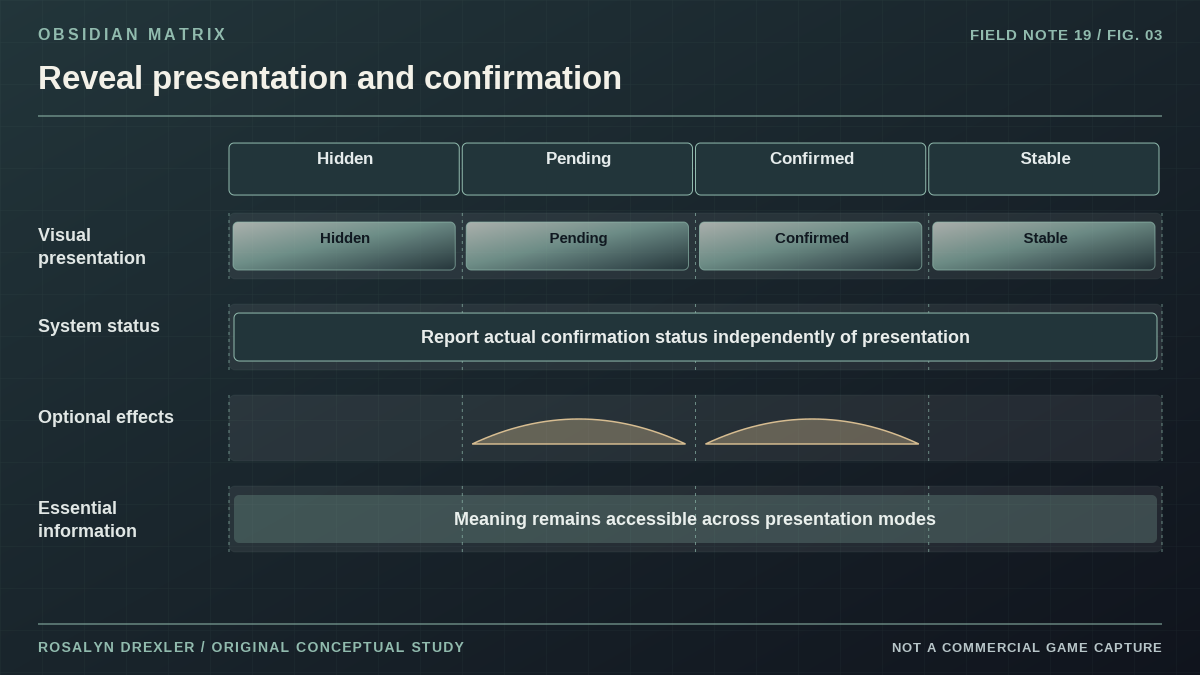
Revealed safe cells. A cell described as safe represents an established revealed condition within the documented game state. The term should not imply that other hidden positions are safe or that the overall financial outcome is guaranteed. Its visual identity should remain recognizable after the reveal effect has concluded.
Losing cells. A losing cell communicates an established unfavorable condition. Its presentation should clearly distinguish it from concealed cells, pending interactions, and other revealed objects. Essential information should remain understandable without relying exclusively on dramatic animation or sound.
State consistency across the grid. A complete interface may display several cell conditions simultaneously. This creates a requirement for consistent visual semantics. The same graphical indicator should not communicate a pending interaction in one part of the interface and an established result elsewhere. A state review should include representative combinations of concealed, revealed, unavailable, and temporarily selected positions. It should also examine whether the appearance of previously revealed cells changes when subsequent interactions occur. Any change should preserve the documented meaning of the affected objects.
Reveal hierarchy. Reveal hierarchy describes the relationship between the newly disclosed information, previously established information, and temporary decorative presentation. The interface should make the newly confirmed condition understandable without obscuring the broader financial context. A reveal animation may introduce additional movement, illumination, or changes in artwork. However, the final visual state should remain interpretable independently of those effects. If decorative movement is interrupted, confirmed information should not disappear or revert to an ambiguous concealed presentation. This relationship is important for reduced-motion accessibility and for devices with variable rendering performance.
Outcome feedback and financial meaning. The outcome of an individual cell interaction should remain distinguishable from the financial outcome of the complete round. A favorable intermediate condition does not necessarily establish a net gain. Similarly, a returned amount should not automatically be presented as a profit if it is smaller than the original wager. The end-of-round summary should therefore identify the scope of its values and communicate the established outcome accurately. Decorative feedback should not contradict that information.
Clear risk indicators and controls
Risk communication is a functional responsibility within Mines game UX design. The interface should make relevant uncertainty understandable rather than treating it as an exclusively decorative aspect of the game theme. Risk notices, configuration labels, financial information, and interaction states should form a coherent informational system.
Transparent risk indicators. A risk indicator should explain the condition it represents. A configuration-related value, an unresolved cell state, and an established financial result communicate different types of information. These distinctions should remain explicit. Labels suggesting safety, security, or certainty should not be applied to unresolved outcomes without a factual basis. The interface should also avoid decorative patterns that imply some concealed positions can be identified as more favorable merely through their appearance.
Control clarity and interaction availability. Controls should communicate their intended functions and current availability. An unavailable interaction should remain distinguishable from an available one without relying exclusively on color. Where a control changes a setting, dismisses an informational message, or submits a financially consequential action, the interface should make that distinction understandable. The grid itself should also provide equivalent state information through supported interaction and accessibility methods.
Accessible grid presentation. A grid containing numerous interactive positions introduces particular accessibility requirements. Keyboard navigation should follow a logical order. Focus indicators should remain visible, while compatible assistive technologies should be able to identify the relevant cell and its current state. Color-independent symbols, explicit labels, and readable status messages can provide alternative forms of communication. These principles complement the broader guidance discussed in Accessibility Design for Slot Game Interfaces.
Practical Mines interface QA. A structured review should evaluate representative grid configurations, device sizes, interaction conditions, and confirmed outcome presentations. Testing should include interrupted connections, keyboard navigation, reduced-motion settings, muted audio, and localized interface content. Reported issues should identify the affected component, actual interface state, reproduction conditions, and supporting evidence.
Ultimately, effective Mines game UX design depends on preserving the distinction between concealed information, pending interactions, confirmed cell conditions, and established financial outcomes. A coherent interface should communicate uncertainty accurately, maintain accessible state indicators, and preserve essential information across changing presentation conditions. Grid architecture, visual feedback, risk notices, and interaction controls should therefore be evaluated as interconnected parts of the same informational system.
Practical design QA checklist
Use this checklist as a review framework; it does not certify accessibility, performance or compliance.