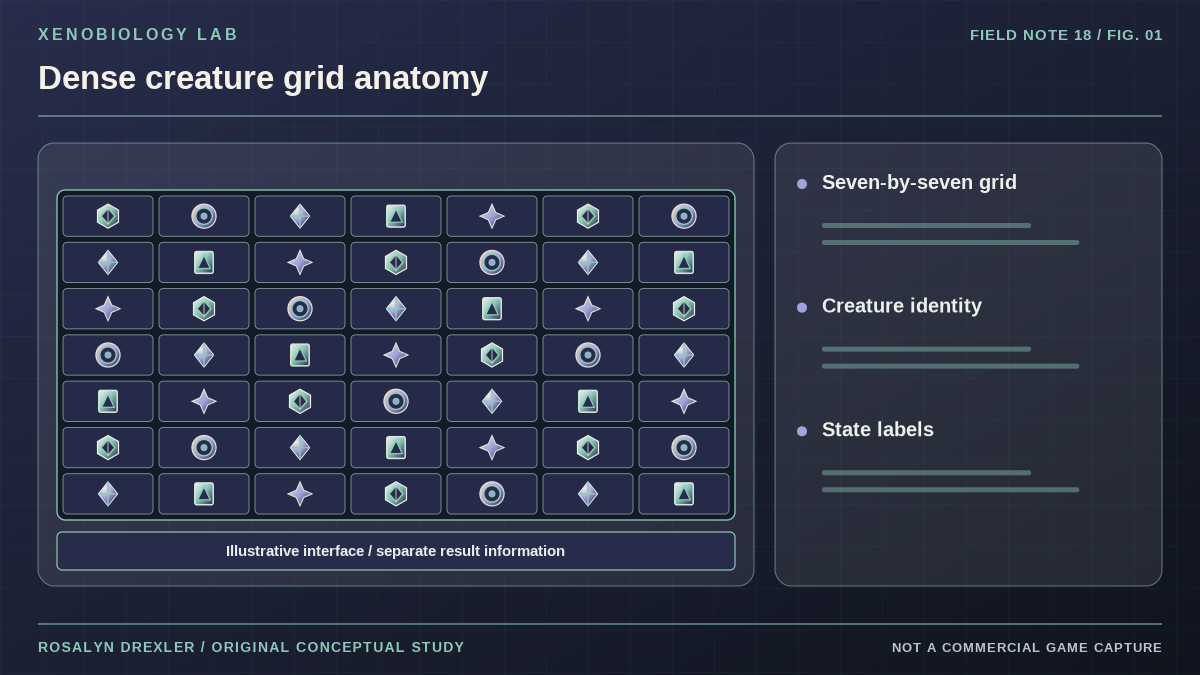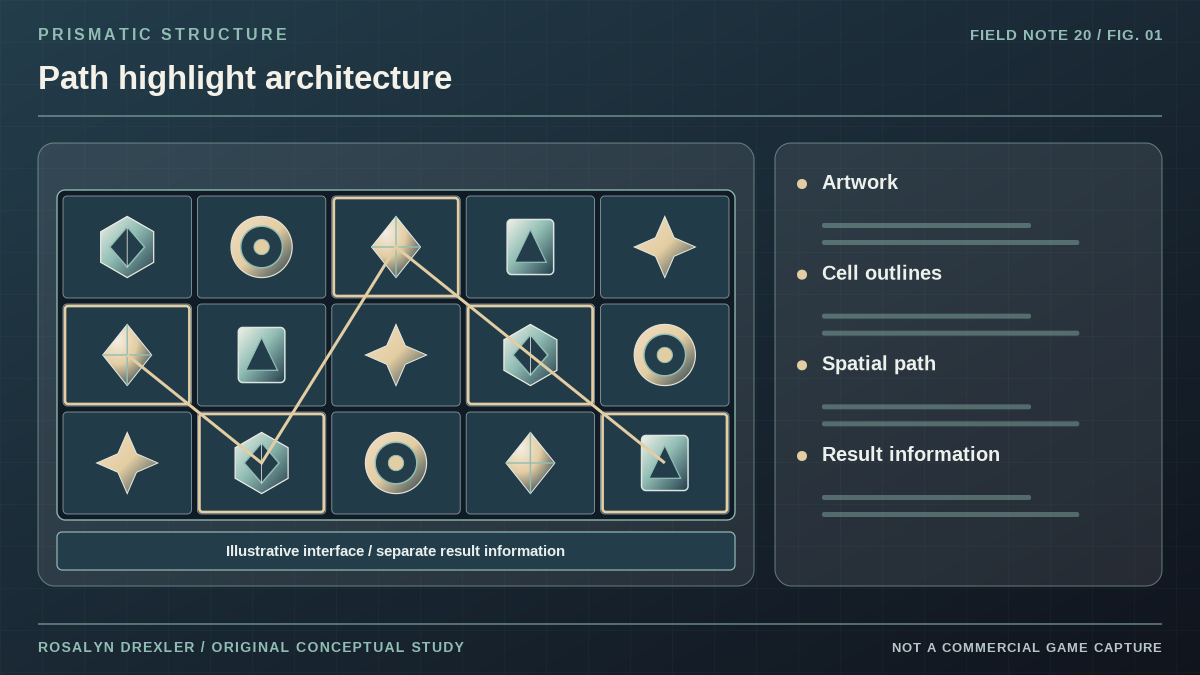
Slot win visualization design concerns the visual communication of confirmed outcomes within a game interface. Its purpose is to explain the relationship between displayed symbols, identified groups, and established result information. Two common visual structures are line-based highlights and cluster-based highlights. Although both communicate relationships between symbols, they introduce different spatial and motion-design challenges.
Line-based presentation identifies a path across a symbol arrangement. Cluster-based presentation identifies a group occupying neighboring positions within a grid. In both cases, the interface must distinguish confirmed information from decorative effects. A visually emphasized symbol arrangement does not necessarily indicate a net financial gain, and its presentation should not suggest otherwise.
This article examines highlight architecture, visual grouping, animation sequencing, mobile readability, and accessible alternatives to decorative motion. All examples use the original fictional visual concept Prismatic Structure, featuring geometric mineral objects, architectural glass, brushed metal, and neutral informational components.
Designing paylines and path highlights
A payline highlight represents a spatial relationship between selected positions within a symbol arrangement. Unlike an isolated symbol effect, a path introduces a continuous graphical element that may pass across multiple cells and surrounding artwork. Its presentation should communicate an established relationship without obscuring the identity of individual symbols. Complex backgrounds, decorative frames, and overlapping graphical effects can interfere with this communication. The path should therefore be evaluated within the complete interface rather than exclusively as an isolated graphical asset.
Contrast, highlighting layers and sequencing
Contrast and graphical separation. A highlight needs to remain distinguishable from both the underlying artwork and neighboring interface components. Its visibility should not depend exclusively on differences in hue. Recognizable outlines, spatial boundaries, and explicit informational labels can provide additional visual distinctions. Contrast requirements may also change when the background contains animated elements or reflective materials.
Highlighting layers. A useful visual specification distinguishes the original symbol artwork, the confirmed result indicator, decorative effects, and contextual information. These elements have different functions. Decorative illumination can be simplified without removing the underlying meaning of the result.
Sequencing and overlapping paths. When several established relationships are presented within the same result, overlapping graphical elements may create ambiguity. The review should examine whether each highlighted relationship can be identified independently and whether relevant information remains accessible after temporary effects conclude. A sequence should distinguish the presentation of individual relationships from the confirmed financial summary of the complete round. For a broader discussion of competing graphical elements and informational priority, see Visual Hierarchy in Slot Game Design.
Designing cluster win highlights
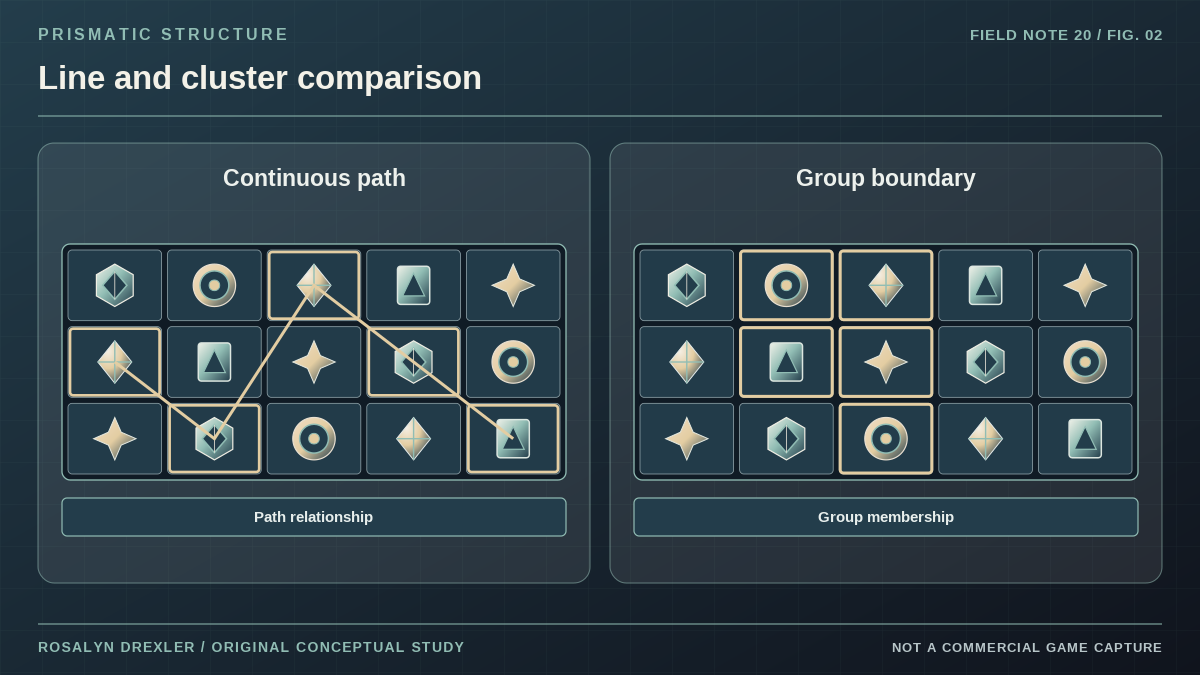
Cluster-based visualization communicates a group rather than a continuous line. The highlighted positions may form an irregular spatial arrangement, requiring a graphical representation that identifies the affected objects without incorrectly including neighboring cells. The group's visual boundary is therefore an important part of its informational meaning. A broad illumination effect may establish a general area of emphasis while failing to communicate which individual objects belong to the confirmed group. A useful design review examines both the collective shape and its constituent positions.
Group borders, transitions and visual grouping
Group borders. A group border can provide a spatial reference for understanding the relationship between identified objects. Its meaning should remain distinguishable from ordinary cell boundaries, decorative framing, and temporary animation effects. Where several groups appear within the same composition, their graphical identifiers should communicate their respective boundaries clearly.
Transitions and changing arrangements. Cluster feedback may be followed by changes in the displayed arrangement. The interface should distinguish the established previous group from temporary visual movement and the subsequent confirmed configuration. When decorative effects are interrupted, the underlying informational meaning should remain available. The specific application of character-based grouping and cascading transitions is examined in Reactoonz Slot UI Design and Cluster Feedback.
The comparison illustrates why line and cluster visualization should not be treated as interchangeable graphical effects. Their spatial structures differ, even though both require consistent communication of established information.
Clear win feedback on mobile
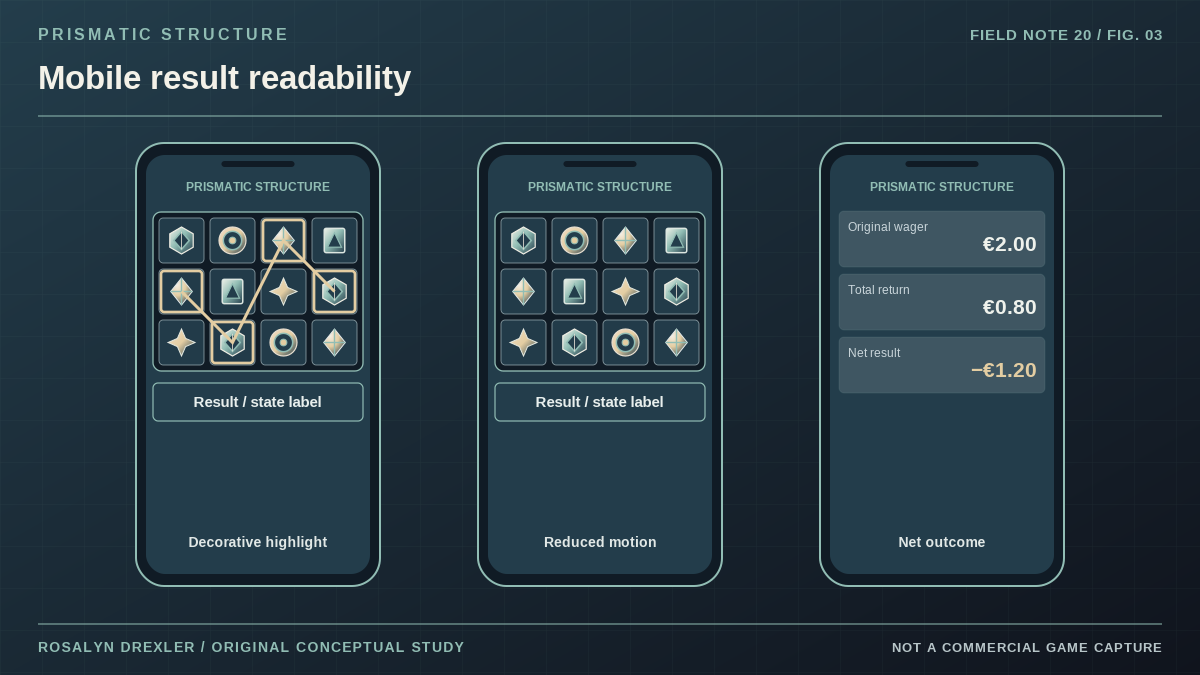
Mobile interfaces introduce additional constraints because symbol artwork, highlights, numerical information, and supporting controls must coexist within a smaller viewport. A graphical effect that remains distinguishable on a desktop display may obscure individual objects or essential labels when reproduced at a reduced scale. Mobile evaluation should therefore consider actual rendered dimensions, screen proportions, localized text, and supported accessibility settings. The objective is to preserve the meaning of confirmed results independently of display size or decorative complexity.
Animation duration, reduced motion and visual clutter
Animation duration. The duration of a decorative highlight should be considered separately from the availability of the information it represents. Users should not lose access to essential outcome information simply because a temporary animation has finished. There is no universal animation duration that establishes readability across all interfaces and devices. Actual requirements depend on the displayed content and supported presentation conditions.
Reduced motion. A reduced-motion alternative should preserve the established spatial relationship and financial meaning of the standard presentation. Static boundaries, explicit labels, and stable result information can communicate essential content without requiring continuous animated effects.
Visual clutter and financial accuracy. An emphasized group of symbols should not automatically be interpreted as evidence of a net financial gain. For example, a round with an original wager of €2.00 and a total return of €1.40 produces a net loss of €0.60. Highlighting the contributing symbols does not change that financial outcome. The summary should communicate this distinction explicitly. A professional review should examine whether graphical highlights remain identifiable, whether financial information is accurately labeled, and whether alternative presentation modes preserve essential meaning.
Ultimately, effective slot win visualization design depends on communicating spatial relationships and confirmed outcomes accurately. Line-based and cluster-based highlights require different graphical structures, but both should preserve readable information, accessible state distinctions, and transparent financial meaning. Decorative complexity should remain secondary to these functional requirements.
Practical design QA checklist
Use this checklist as a review framework; it does not certify accessibility, performance or compliance.