Cascading reels animation design concerns the visual presentation of changing symbol arrangements within a game interface. Instead of relying exclusively on conventional reel movement, cascading interfaces present sequences in which identified objects disappear, remaining objects change position, and new artwork enters the display. This creates a distinctive motion-design challenge. The interface must communicate changes across several spatial positions while preserving recognizable objects, stable boundaries, and accurate result information.
A visually sophisticated transition can still be difficult to interpret if graphical effects obscure which objects have disappeared or if numerical information changes without sufficient context. Motion choreography therefore needs to distinguish the information represented by an animation from its decorative presentation. This guide examines symbol removal, falling-object transitions, refill states, feedback sequencing, accessibility, and mobile performance. All illustrations use the original fictional concept Ceramic Dynamics, inspired by glazed mineral ceramics, cobalt-blue architectural surfaces, copper detailing, and precision-crafted geometric objects. The examples illustrate visual communication principles rather than a playable game or an outcome-generation system.
Motion choreography for cascading symbols
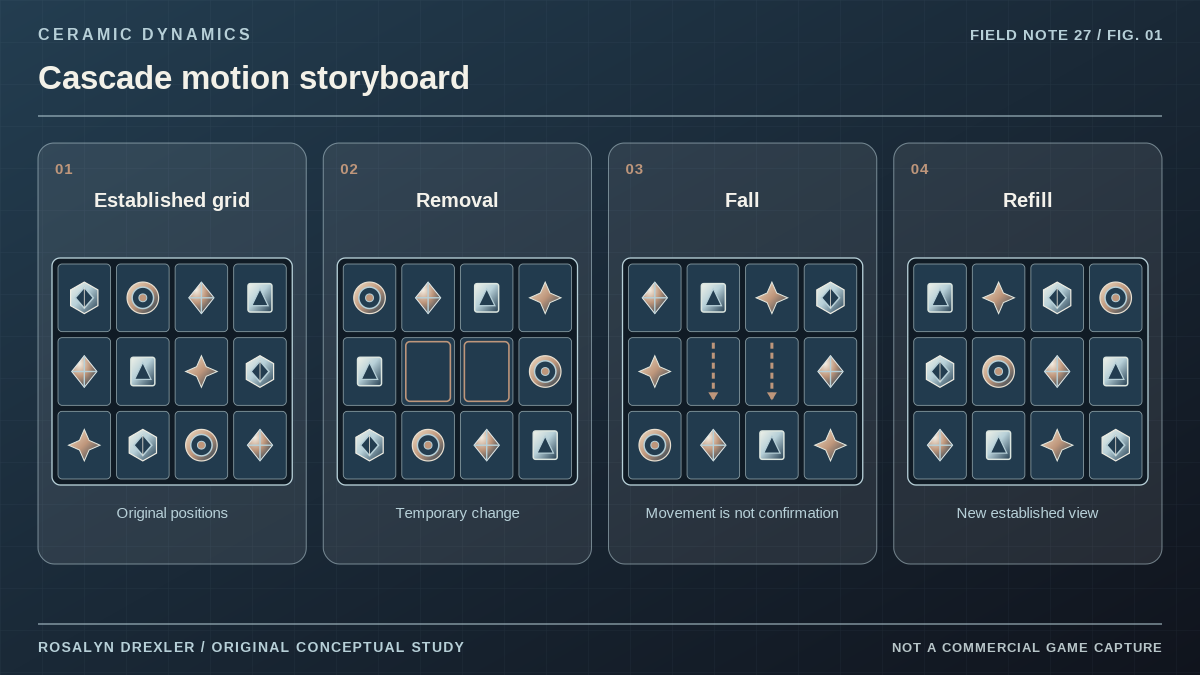
A cascading composition contains both persistent spatial references and changing objects. The outer grid, cell boundaries, and contextual interface regions provide a relatively stable structure. Individual symbols may disappear, move, or change appearance within that structure. Motion choreography describes the organization of these visual changes and the relationships between their presentation states. An effective motion specification should distinguish established object positions from intermediate animation frames. A temporary graphical arrangement should not be mistaken for a confirmed result. This distinction becomes particularly important when several objects change simultaneously.
Removal, fall and refill as readable visual states
Symbol removal. Removal communicates that particular objects no longer belong to the displayed arrangement. The original positions, surrounding objects, and grid boundaries provide context for interpreting this change. Decorative fragmentation, fading, or material transformation may accompany the presentation. However, these effects should not make unrelated neighboring symbols appear to have been removed. The essential information is the change in the established arrangement, not the complexity of the disappearance effect.
Falling objects and spatial continuity. A falling-object presentation introduces a temporary relationship between an object's earlier position and its subsequent displayed location. Its visual identity should remain recognizable throughout the transition. Abrupt changes in scale, material treatment, or silhouette can make it difficult to distinguish an existing object from newly introduced artwork. A stable architectural frame provides a continuous reference while the internal composition changes. The presentation should also distinguish stationary objects from moving ones. Decorative background movement should not create uncertainty about which objects are actually changing position.
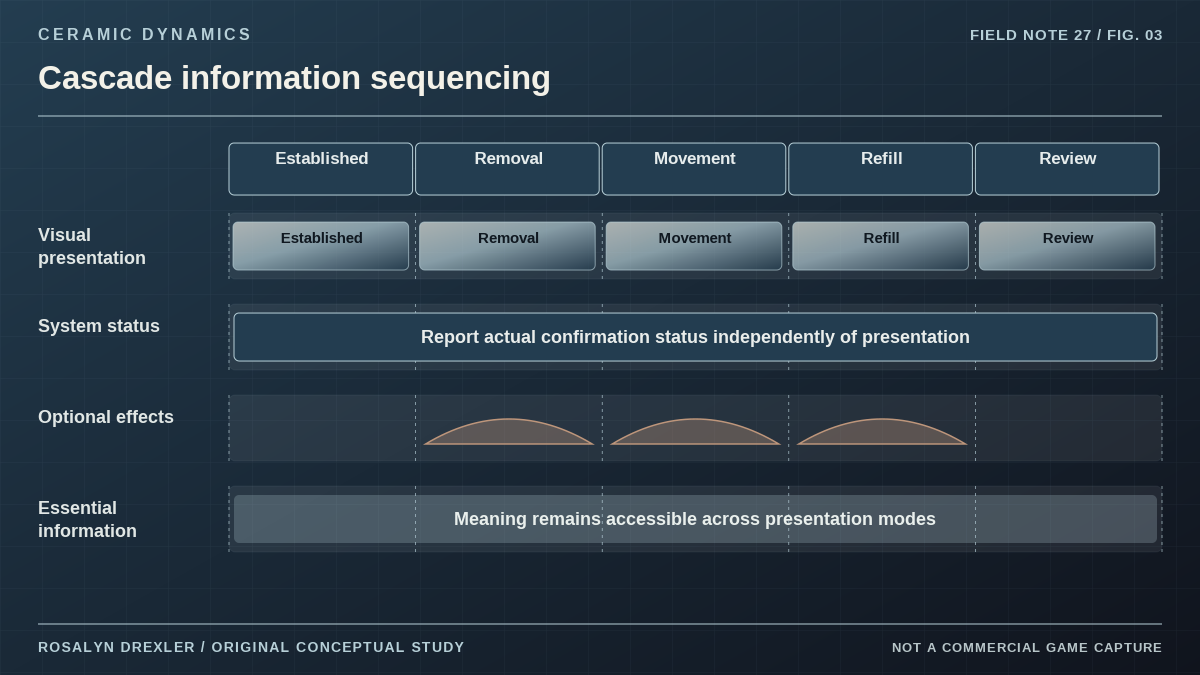
Refill and established arrangements. Refill introduces additional artwork into the displayed composition. The interface should distinguish objects that are entering the presentation from those occupying established positions. When the transition concludes, the displayed arrangement should correspond to confirmed system information. A completed animation should not independently establish that a result has been confirmed. This separation between visual completion and system confirmation is particularly relevant when rendering or network interruptions affect the presentation.
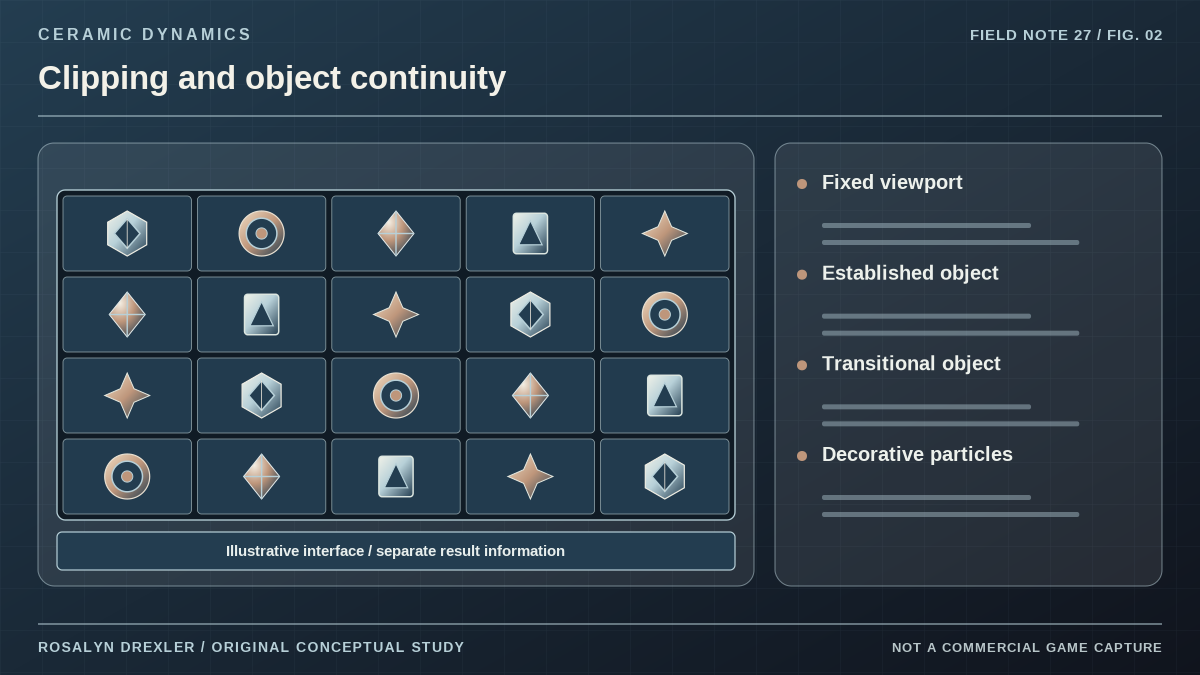
Motion boundaries and clipping. Symbols entering or leaving the visible region may be partially obscured by the architectural frame. Clipping boundaries should preserve the distinction between the display region and surrounding information panels. A visual review should examine whether objects, shadows, and decorative effects extend into areas containing essential labels or numerical information. The original comparison illustrates how different visual components can coexist within a changing grid.
Sequencing feedback between cascades
A cascading interface may present several changing arrangements within the same round. This introduces a temporal information problem in addition to the spatial one. The interface needs to communicate which information belongs to a particular displayed state and which describes the complete round. Counters, temporary highlights, graphical transitions, and financial summaries should therefore be treated as interconnected information components. Their presentation should remain consistent with the underlying confirmed data.
Counters, pauses, transitions and emphasis
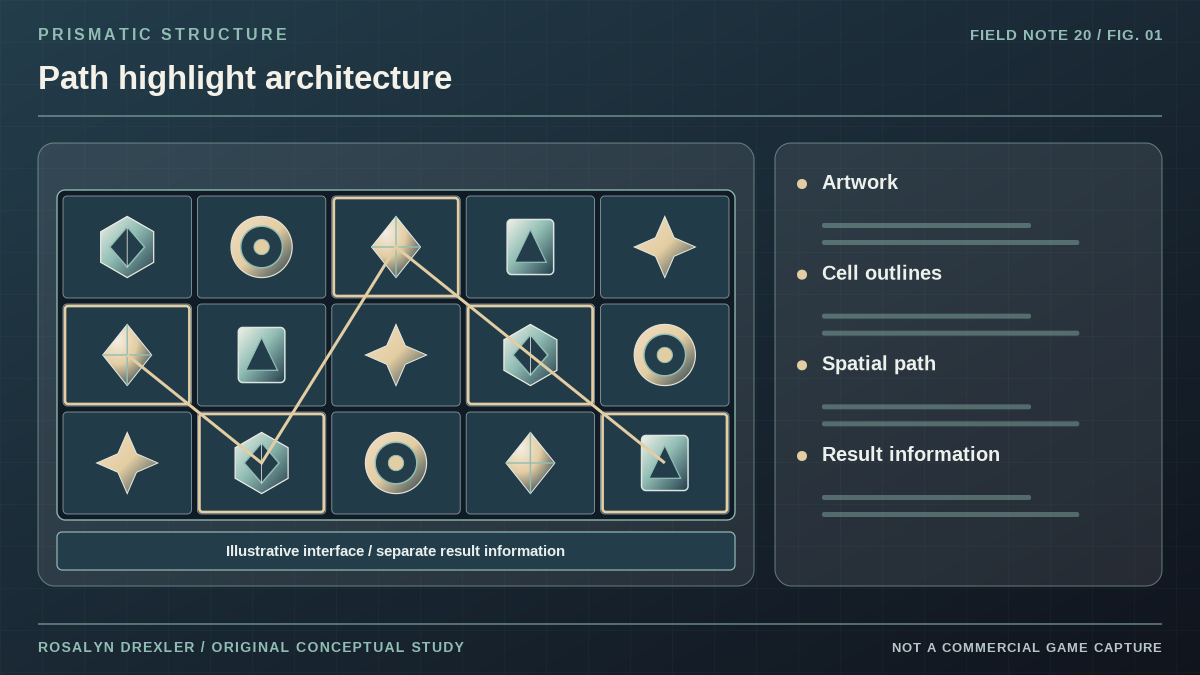
Counter semantics. A numerical counter can represent different types of information depending on the interface. It may describe an established intermediate value, a contextual condition, or an accumulated return. These meanings should remain explicitly distinguishable. An updating number should not appear to represent a net financial gain if it actually communicates a different quantity. A clear financial summary should identify its scope and distinguish the total returned amount from the net outcome. The broader visualization of confirmed symbol relationships is examined in Slot Win Visualization Design: Lines and Clusters.
Pauses and information availability. A pause between graphical transitions may create an opportunity to inspect a displayed arrangement. However, essential information should not depend exclusively on a brief interval between animations. Confirmed values and relevant explanations should remain accessible after decorative transitions conclude. A motion specification should distinguish temporary presentation time from the period during which established information remains available. There is no universally appropriate pause duration. The actual requirements depend on the amount of information, display conditions, accessibility settings, and implementation.
Transition emphasis. Visual emphasis should correspond to the information being communicated. A decorative effect associated with one identified group should not suggest that unrelated objects have also produced an established result. Similarly, visual intensity should not imply that an intermediate returned amount represents a financial gain when the complete outcome remains unresolved. The qualitative timeline illustrates the relationship between presentation states and persistent information.
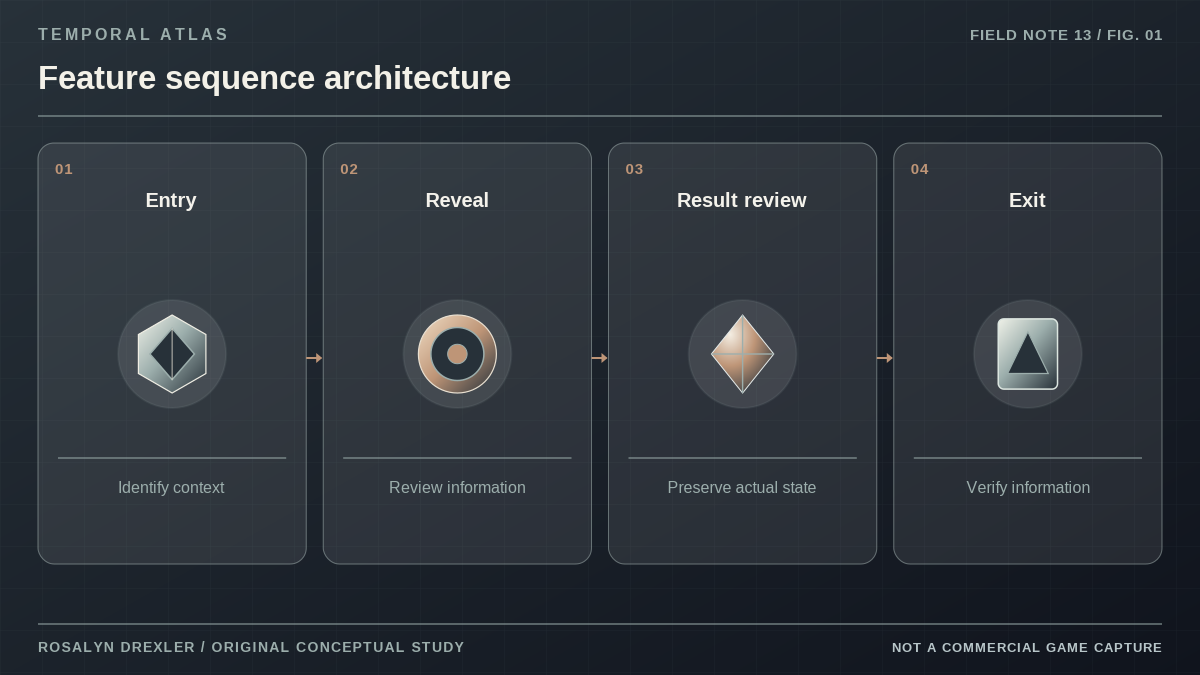
Individual cascades versus feature pacing. The choreography of an individual cascade should be distinguished from the overall pacing of a longer feature sequence. A cascade specification concerns the presentation of changing objects and associated information. Feature pacing encompasses additional entry states, contextual transitions, result summaries, and the return to another interface environment. These disciplines overlap, but they address different levels of the presentation architecture. The broader temporal structure is discussed in Bonus Round Pacing in Slot Games.
Performance and accessibility QA
Cascading interfaces may contain numerous simultaneously changing graphical objects, transparent layers, textured assets, and decorative effects. Their actual performance depends on the implementation, device capabilities, rendering environment, and production assets. A static design preview cannot establish whether the completed animation will remain readable or technically consistent under representative conditions. Performance and accessibility should therefore be evaluated together with the actual state presentation.
Reduced motion, skip options and mobile optimization
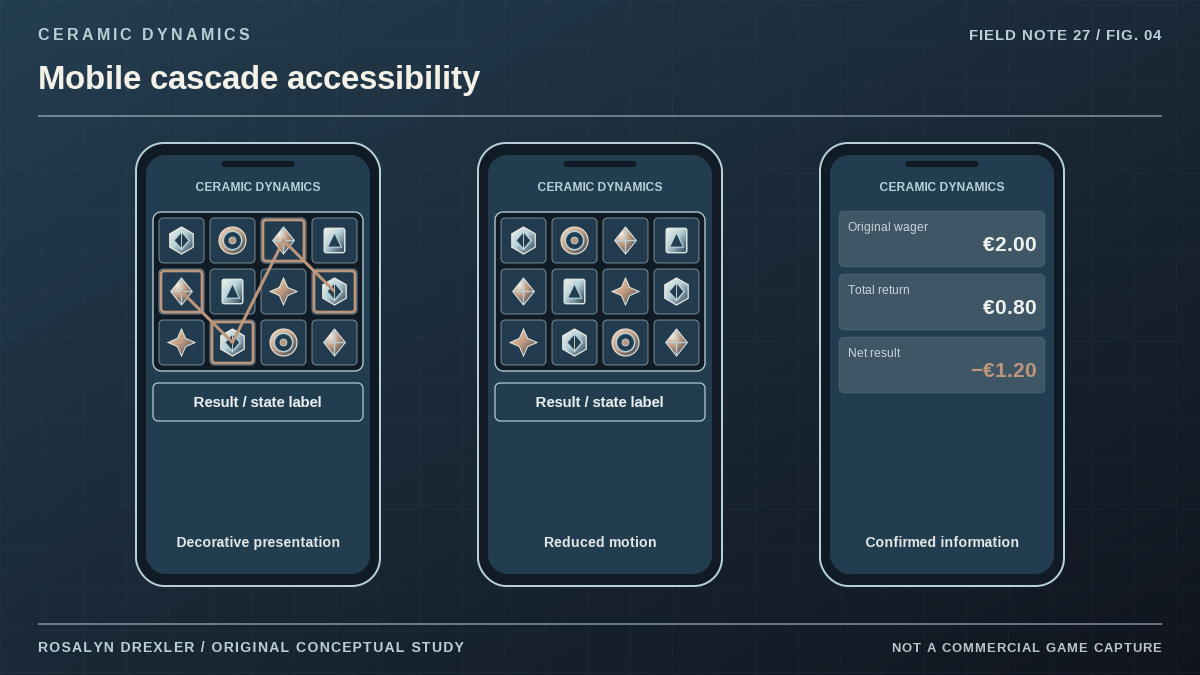
Reduced-motion presentation. A reduced-motion alternative should preserve the essential information communicated by the standard animated sequence. Users should be able to distinguish established arrangements, relevant changes, and confirmed outcomes without requiring continuous graphical movement. Static boundaries, explicit status labels, and stable result summaries can provide equivalent informational references. Reduced motion should not change the meaning of an established result.
Skip options. Where a product supports skipping decorative animations, the interface should communicate which presentation is being skipped and which information remains available. Skipping a visual sequence should not silently submit another financially consequential action or obscure an unresolved system condition. The resulting interface must accurately represent the established state. Controls associated with skipping should also remain accessible through the supported interaction methods.
Mobile optimization. Smaller viewports can reduce symbol dimensions and increase the likelihood of overlapping decorative effects. Mobile evaluation should examine object recognition, clipping, numerical readability, localized labels, and the preservation of essential information during changing compositions. Technical testing should include frame consistency, resource consumption, interrupted animations, orientation changes, and application recovery. The review should distinguish rendering problems from network delays and actual system-state changes.
Practical motion QA. A structured review should examine representative combinations of removed objects, changing positions, newly displayed artwork, and established results. Designers should inspect recorded presentation states at actual display dimensions and verify that interrupted or simplified animations preserve essential information. Reported defects should identify the affected visual component, device conditions, interface state, and supporting evidence. Numerical performance conclusions should be based on instrumented testing rather than assumptions derived from artwork complexity.
Ultimately, effective cascading reels animation design depends on preserving spatial continuity, readable transitions, accurate feedback, and accessible alternatives. Removal, fall, refill, counters, and decorative effects should be evaluated as parts of one information system. The quality of the sequence depends not merely on visual sophistication, but on whether confirmed information remains understandable throughout changing presentation conditions.
Practical design QA checklist
Use this checklist as a review framework; it does not certify accessibility, performance or compliance.