Non-winning spin feedback design concerns the visual, auditory, and informational presentation of a completed spin that has not produced a financial gain. While game interfaces frequently use expressive artwork and animation to communicate changing states, non-winning outcomes require a particularly clear distinction between decorative presentation and financial reality. A completed spin should communicate its actual result without implying that a loss represents an achievement, a reward, or evidence of an approaching favorable outcome.
Neutral feedback does not mean that the interface must abandon its artistic identity. It means that visual and auditory elements should remain consistent with the established result. This article examines outcome messaging, neutral visual transitions, sound design, accessible feedback, and the prevention of misleading near-miss presentations. All illustrations belong to the original fictional concept Lunar Ledger, combining matte graphite surfaces, pale mineral objects, astronomical geometry, and restrained editorial typography.
What players need to know after a spin
A completed spin introduces a transition from an active presentation to an established result. The interface should communicate whether the spin has concluded, whether its financial information has been confirmed, and what the displayed outcome means. These requirements apply independently of the game's visual theme. An unresolved transaction should not be presented as a completed loss. Similarly, a completed negative result should not remain visually ambiguous simply because the decorative sequence has ended.
Outcome state and clear messaging
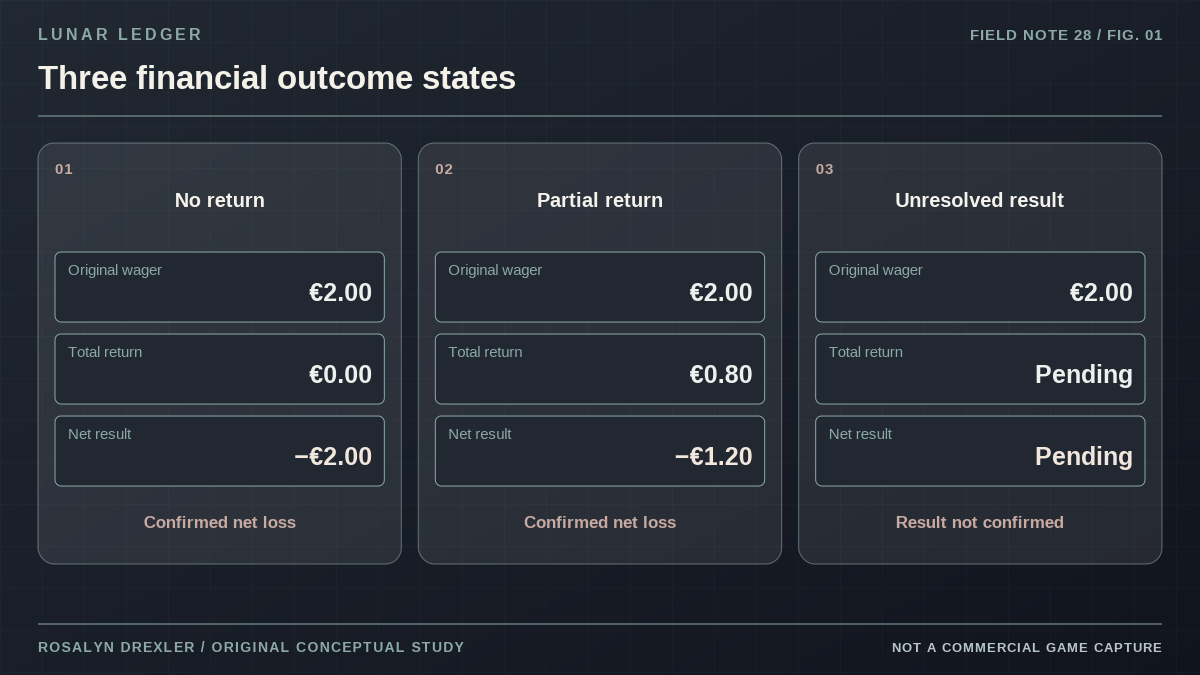
Distinguishing different financial outcomes. A spin producing no return differs from a spin returning an amount smaller than the original wager. Both can represent a net financial loss, but their displayed financial information is different. For example, a €2.00 wager with no returned amount produces a net loss of €2.00. If the same wager returns €0.80, the net loss is €1.20. The interface should communicate these distinctions through understandable labels rather than relying on the appearance of the symbols.
Clear outcome messaging. Concise messages such as “No return,” “Net loss,” or “Result pending” describe different informational conditions. Their use should correspond to the actual established system state. A returned amount should not be described as a financial gain when the overall result remains negative. Similarly, a neutral visual presentation should not remove information necessary to understand the outcome.
Visual and audio patterns for no-win results
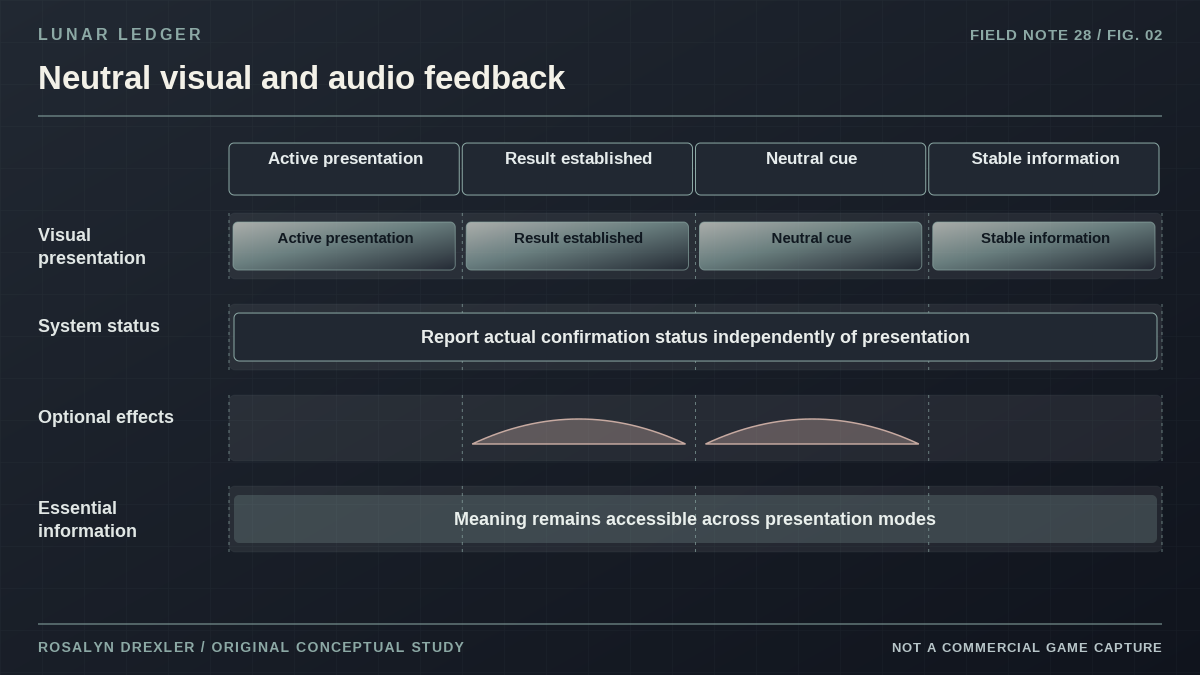
Non-winning feedback should preserve the recognizable visual language of the interface while accurately communicating the absence of a favorable financial outcome. The presentation can retain its established materials, colors, typography, and graphical identity without introducing celebratory effects that contradict the result. Visual completion and financial confirmation should remain distinguishable throughout the transition.
Neutral cues, transitions and hierarchy
Neutral visual cues. A stable symbol arrangement, restrained graphical transition, and explicit result label can communicate the completion of a spin. Decorative elements should not suggest that an ordinary loss represents a special achievement. Confetti, reward-like overlays, or congratulatory messages are inappropriate when they contradict the established financial outcome.
Transitions and visual hierarchy. The transition from a moving arrangement to a completed state should preserve essential information. Financial labels should remain readable after decorative effects conclude, and their meaning should not depend on a brief animation frame. If an animation is interrupted, the interface should continue to represent the actual confirmed system state.
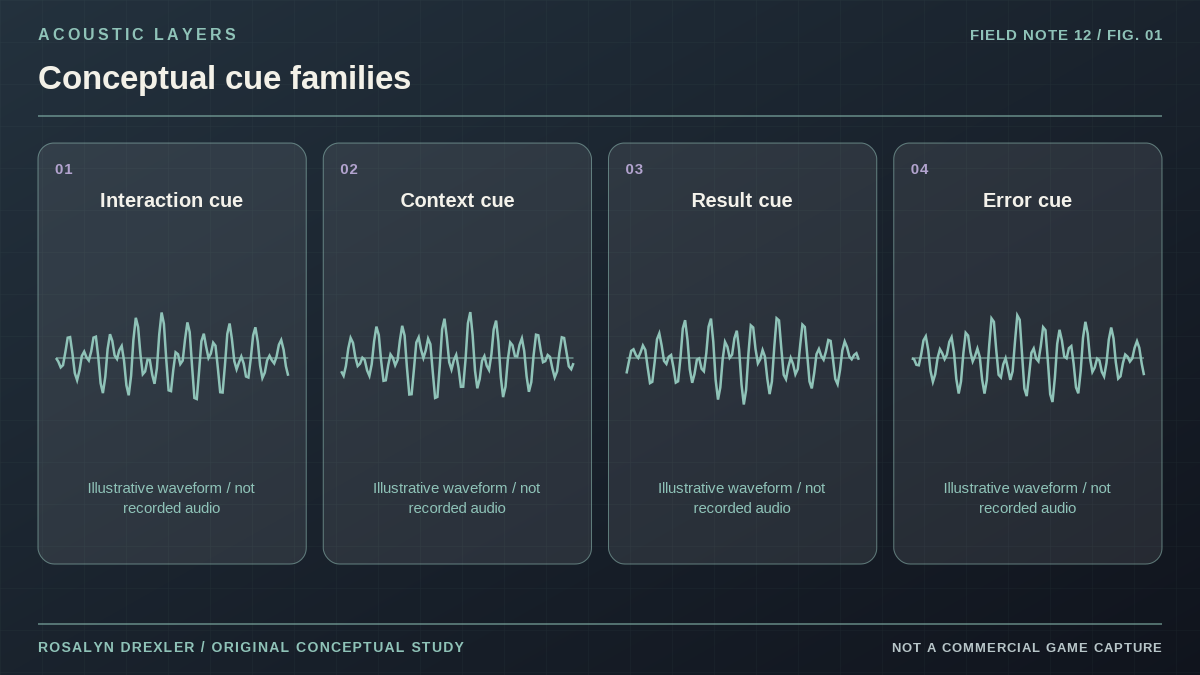
Sound and informational alternatives. Audio can identify the conclusion of a visual sequence, but it should not create a misleading impression of financial success. A neutral completion cue should remain distinguishable from celebratory audio associated with genuinely favorable outcomes. The same essential information should be available when sound is disabled. The broader organization of audio-event systems is examined in Sound Design for Slot Game Interfaces.
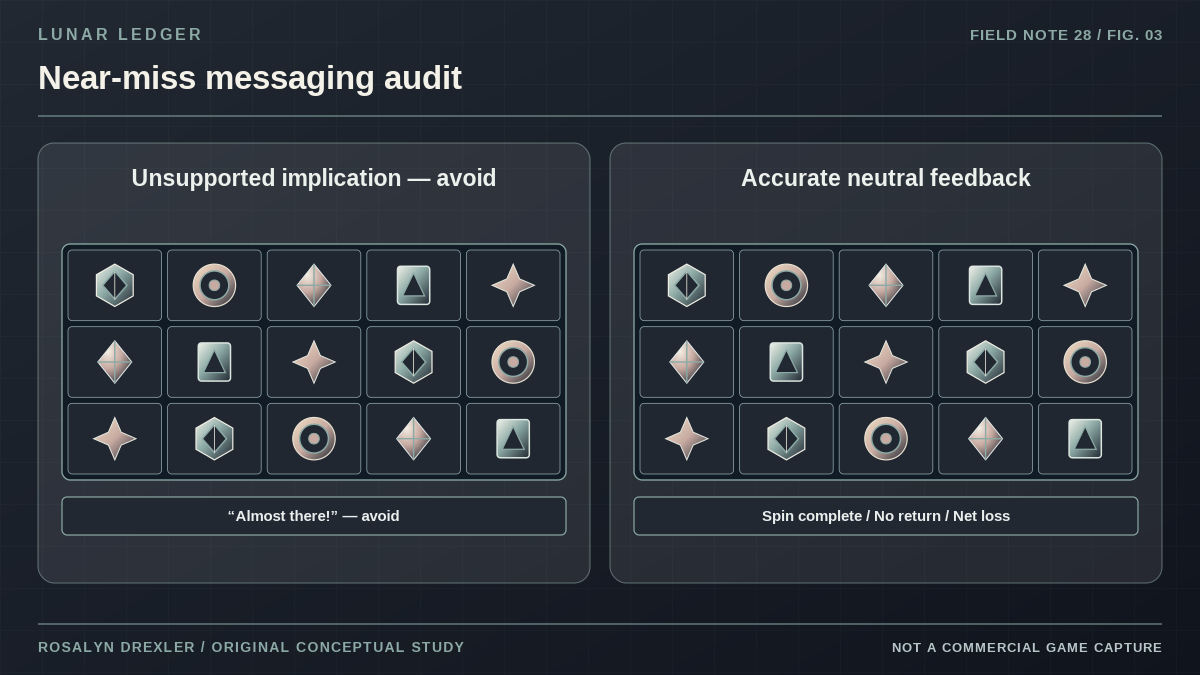
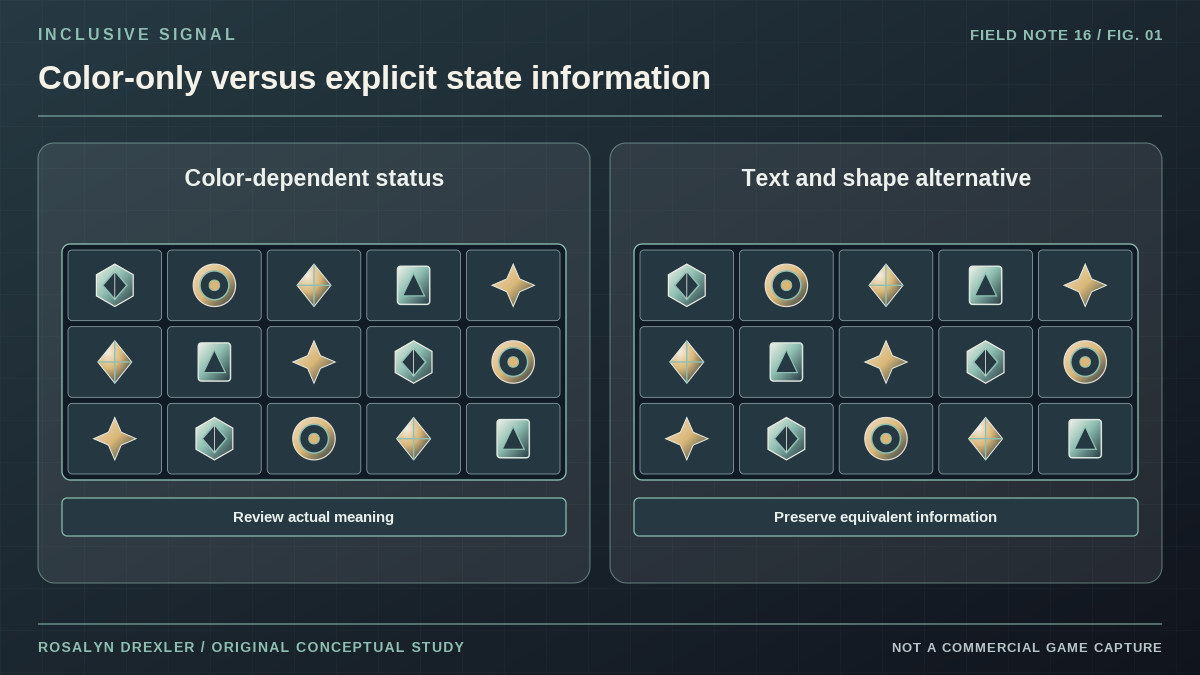
Accessibility considerations. Non-winning feedback should remain understandable without color-dependent distinctions, continuous movement, or sound. Explicit labels, readable typography, and accessible status descriptions can communicate equivalent information across different presentation settings. Reduced-motion alternatives should preserve the meaning of the outcome rather than simply remove every graphical indicator. Additional inclusive design principles are discussed in Accessibility Design for Slot Game Interfaces.
Avoiding misleading near-miss feedback
A near-miss presentation may occur when the final arrangement visually resembles a recognizable favorable combination without actually producing that outcome. The resemblance does not establish that a future spin is more likely to produce a favorable result. The interface should avoid adding messages or effects that communicate unsupported implications about the significance of such an arrangement. Expressions such as “Almost there” or “So close” can introduce ambiguity when the actual financial outcome is an ordinary loss. A transparent presentation communicates the established result without assigning predictive meaning to the final symbol positions.
The distinction between anticipation before confirmation and feedback after confirmation is important. The former is discussed in Anticipation Animations in Slot Games.
Evaluating outcome consistency. A practical review should compare the displayed symbols, written message, audio treatment, and financial summary. These components should communicate compatible information. Testing should also cover muted audio, reduced motion, smaller displays, localized messages, and interrupted presentation states. A negative financial outcome should remain identifiable under every supported presentation condition.
Ultimately, effective non-winning spin feedback design depends on honest communication rather than decorative complexity. The interface should acknowledge completed outcomes, preserve accurate financial information, and avoid misleading implications about future results. Neutral feedback, accessible alternatives, and consistent messaging establish a coherent foundation for responsible game interface design.
Practical design QA checklist
Use this checklist as a review framework; it does not certify accessibility, performance or compliance.