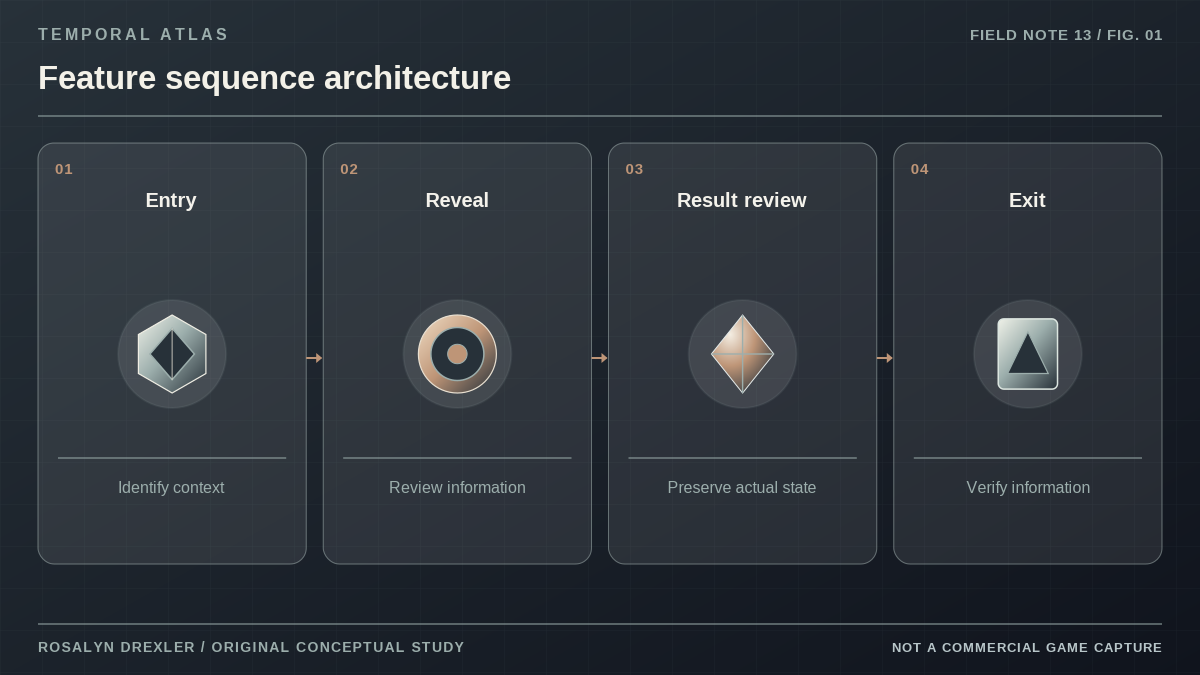
Anticipation animation concerns graphical and auditory presentation before a result is established or fully displayed. Slot anticipation animations can indicate a changing visual state, but their treatment should not imply that an uncertain financial outcome has become more favorable without supporting information. This guide examines the meaning of pre-result cues, their relationship to system status and accessible alternatives. It does not discuss strategies or optimization of gambling engagement.
What anticipation animation communicates
A pre-result cue should have a documented informational purpose. It may indicate that the display is still changing or that a graphical state is not yet resolved. The cue itself is not evidence of an established financial outcome. Designers should distinguish the temporary presentation from the actual information available to the system.
Teases, near-miss signals and reel states
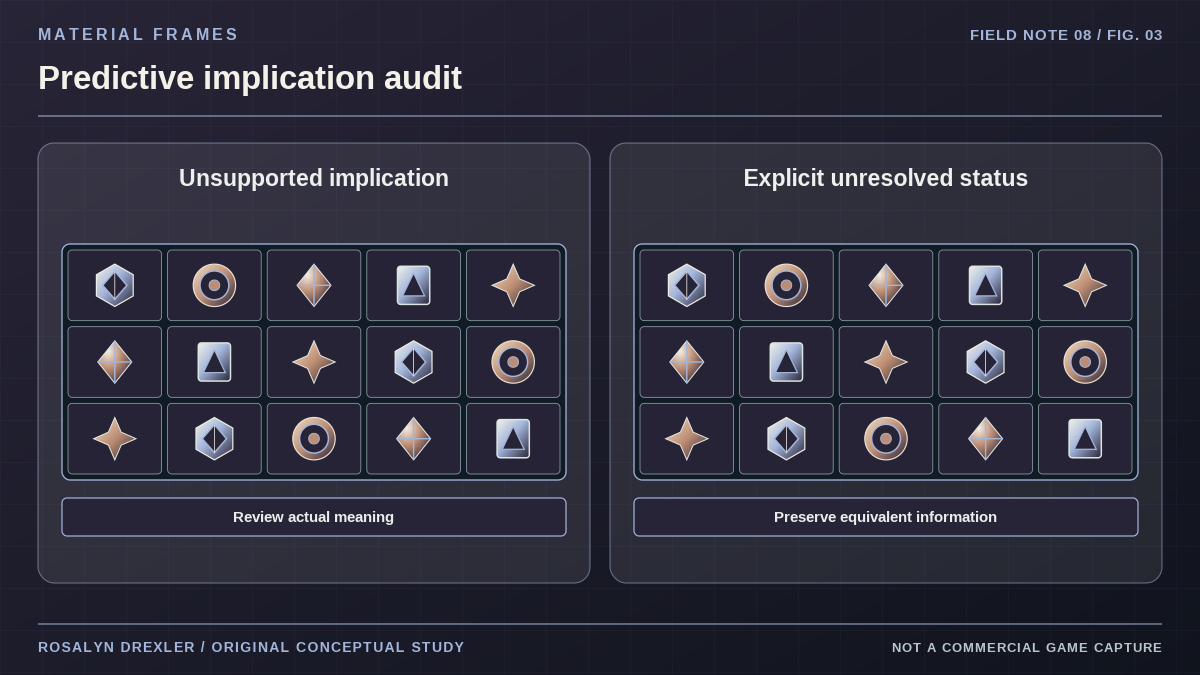
Teases and near-miss signals. A graphical arrangement may resemble a recognizable result before its final presentation. Additional emphasis should not suggest that this resemblance is evidence of an approaching favorable outcome. Avoid attaching unsupported predictive meaning to an ordinary visual condition. A neutral status label can explain that the result is unresolved without making claims about what will occur.
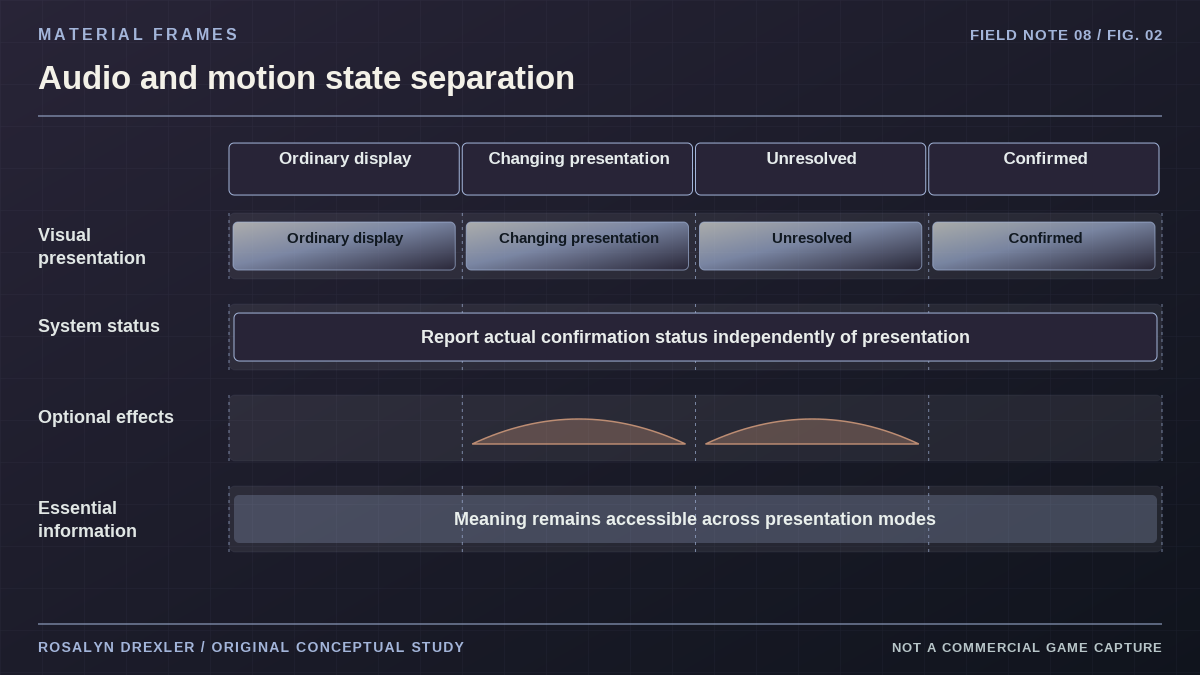
Reel states. An established static arrangement, changing presentation and unresolved result are different conditions. A motion specification should identify which graphical layers represent each state. Decorative light or movement should not replace an essential indicator. The supplied material frames are a fictional visual study, not a recorded example of a commercial animation. See wild symbol animation design for transformations of individual objects.
Designing timing and feedback
Timing and sound must remain consistent with the information being represented. A decorative cue can accompany a graphical transition, but it should not be used as evidence of a result. The duration of the visual presentation and the availability of confirmed information should be documented separately. No universal duration establishes readability across all interfaces.
Sound, movement and state consistency
Sound and movement. If both audio and motion are used, their meaning should be compatible. A sound that implies a completed favorable outcome is inappropriate while information remains unresolved. Muting audio must not remove the only indication of the current state. A reduced-motion alternative should preserve essential status information without requiring continuous decorative effects.
State consistency. Inspect the presentation before, during and after a cue, including interrupted animations and connection changes. The interface should not revert established information or present an unknown result as confirmed. For larger feature sequences, bonus round pacing examines the relationship between individual transitions and the overall information lifecycle.
A cue-mapping exercise. A useful motion document can include three distinct columns: the system information actually available, the visible presentation, and the optional sound. Record a representative unresolved condition and an established result as separate entries. If a sound or visual effect is used during both entries, its meaning must remain compatible with both. An effect that is interpreted as confirmation in one context should not be the only status indicator in an unresolved context. This exercise makes it easier to identify semantic inconsistencies before reviewing graphical details.
Inspect the same sequence with audio muted and decorative movement simplified. The status should remain understandable through explicit information. If it is not, the missing information must be supplied through an equivalent presentation rather than inferred from another effect. A qualitative timing diagram can document the intended relationship between these layers without assigning unmeasured numerical durations.
Avoiding misleading outcome cues
A pre-result animation should not claim that a future outcome is guaranteed, that a particular symbol position predicts a result or that an ordinary near miss is an achievement. These implications can arise from wording, audio or visual treatment. The appropriate review is to compare the communicated meaning with the established system information.
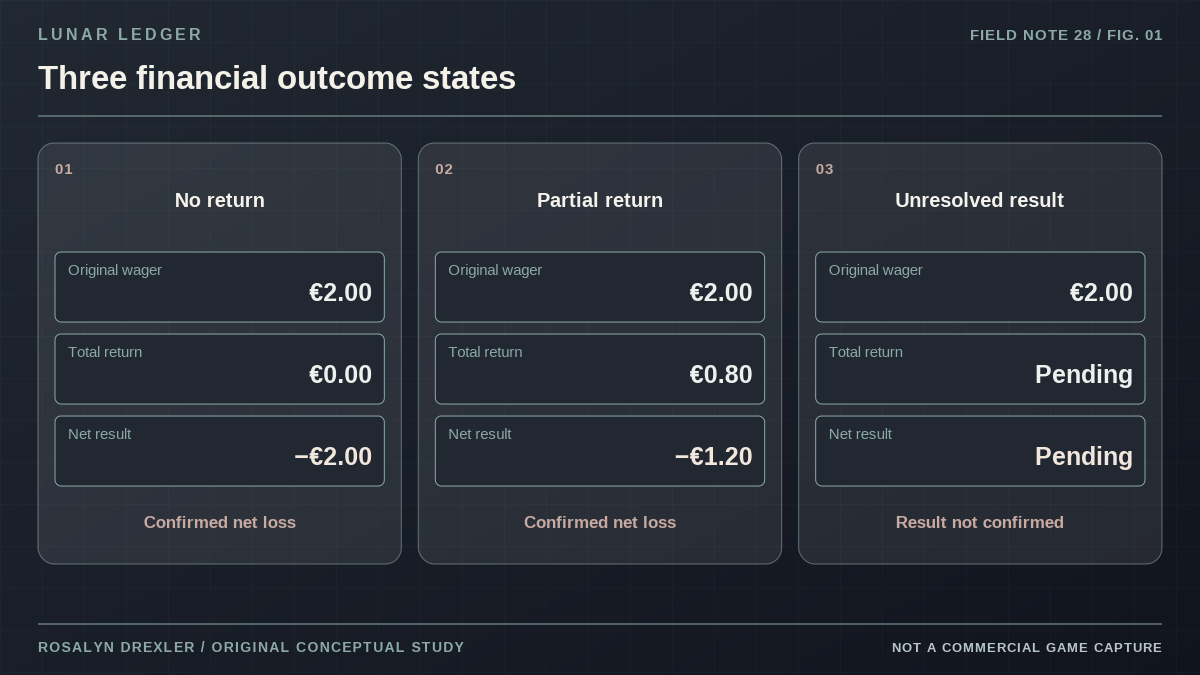
After the result is confirmed, the interface should use accurate outcome feedback. The distinction is discussed in non-winning spin feedback design. A practical QA review should include pending conditions, confirmed negative outcomes, reduced motion, muted audio, smaller displays and application interruptions. Record the actual presentation state and relevant evidence before drawing conclusions about user comprehension.
Reviewing wording alongside motion. A pre-result message should be assessed in the same context as the corresponding artwork and sound. An apparently neutral graphical cue can become misleading when accompanied by language suggesting a favorable outcome is imminent. Conversely, a factual status description can remain understandable without dramatic emphasis. Record the exact wording and the actual state available to the system. The review should identify any claim that is unsupported by that state. This is more useful than judging the sequence solely by how visually expressive it appears.
When a result has been established, verify that the subsequent feedback accurately describes its financial meaning. A resemblance to a recognizable arrangement is not evidence of a future result. The design issue is the unsupported implication, not the mere presence of recognizable symbols. Review ordinary, negative and unresolved outcomes using consistent criteria, and distinguish the findings of this inspection from unmeasured assumptions about user reactions.
Effective anticipation animation communicates that the display is changing without assigning unsupported predictive meaning to uncertainty. Its artistic language should remain compatible with the overall interface while functional information stays available independently of decorative motion or sound.
Practical design QA checklist
Use this checklist as a review framework; it does not certify accessibility, performance or compliance.