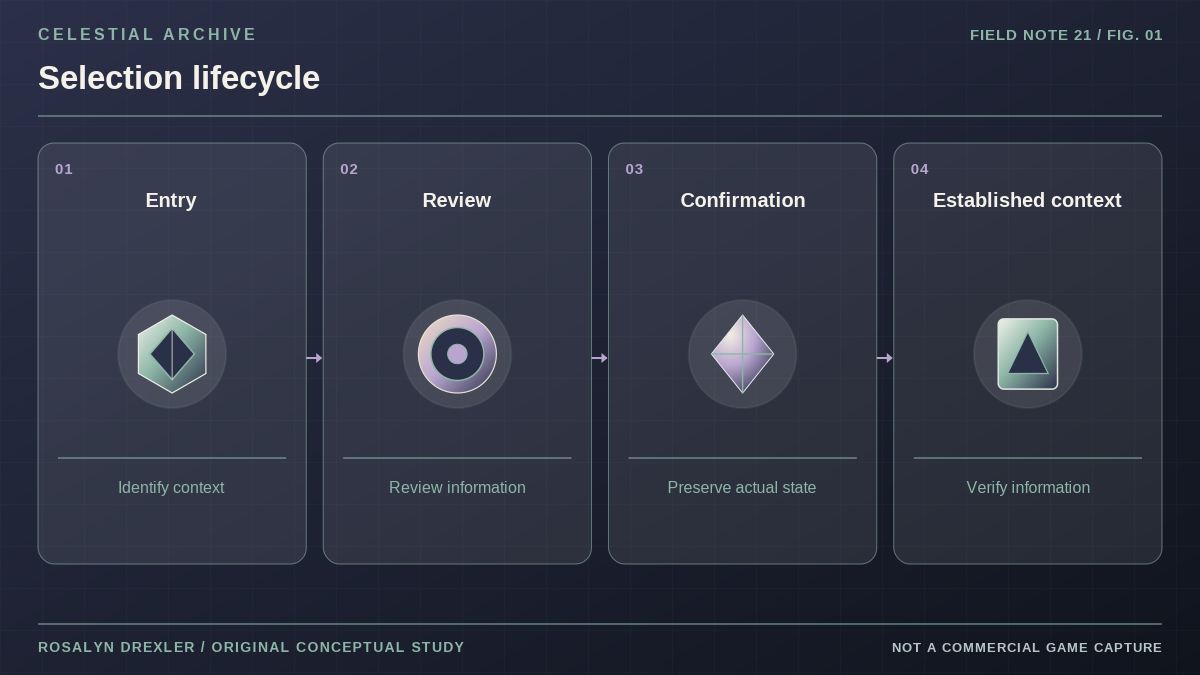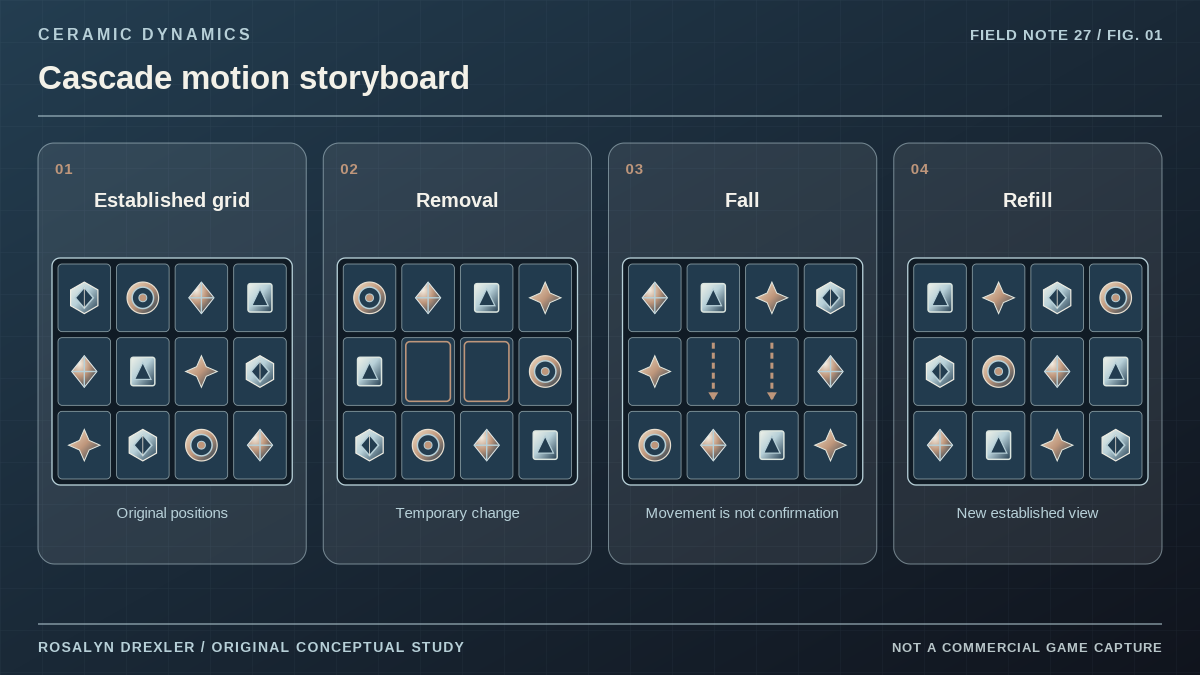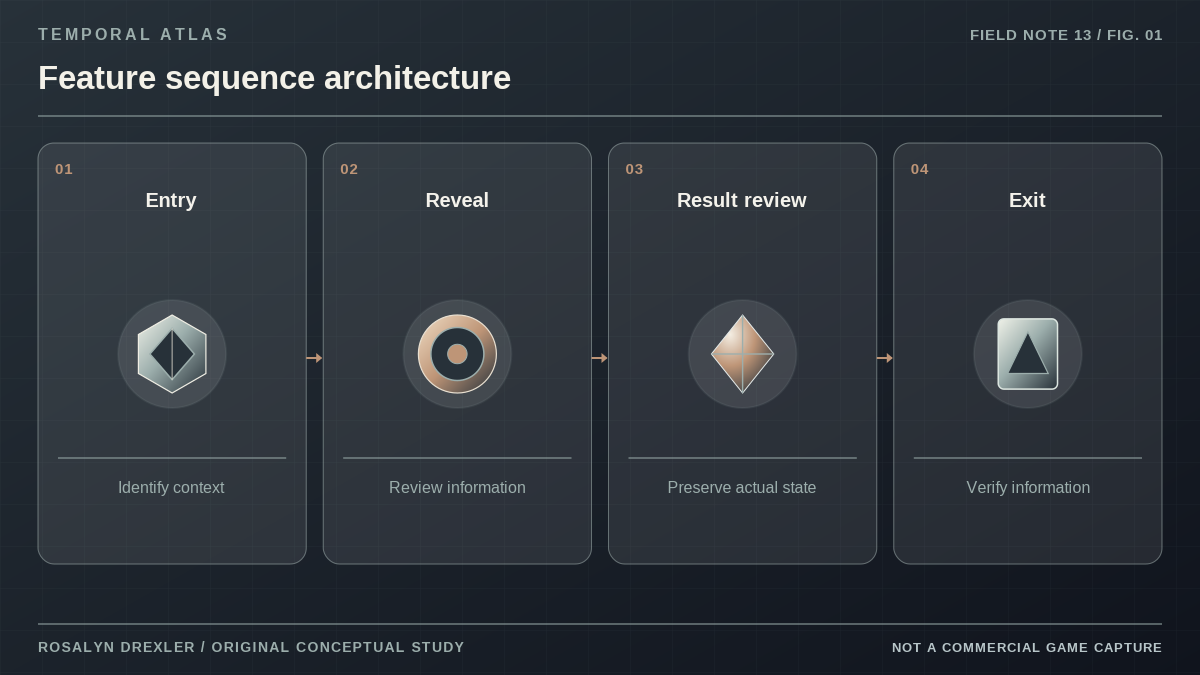
Slot bonus round pacing concerns the temporal organization of an established feature sequence, including its contextual entry, changing visual states, information review and exit. It is distinct from the design of persistent feature counters or the choreography of a single cascade. The aim is to make the evolving context and confirmed information understandable throughout the sequence. The original Temporal Atlas illustrations use a copper-and-graphite visual vocabulary to map qualitative phases without prescribing numerical animation durations.
Mapping the flow of a bonus sequence
Begin with a feature-state map rather than a timeline of decorative effects. Identify the documented entry condition, active context, temporary presentation, established intermediate information, complete financial result and transition to the next interface environment. Each state needs an explicit informational responsibility. A visual phase is not necessarily identical to a system state.
Entry, reveal, reward and exit states
Entry. The entry presentation should explain why the context has changed. If a choice remains unresolved, its status should be distinguishable from an established feature. Relevant conditions and complete reference information must remain discoverable. A themed announcement can communicate identity, but should not independently establish a transaction or guarantee a financial outcome. The distinction between reviewing options and confirming them is explored in bonus selection UX.
Reveal. A reveal phase may contain changing symbols, contextual labels and temporary graphical effects. The specification should distinguish an established object condition from its decorative transition. The essential information must remain available after the reveal concludes. Where several changing objects are involved, spatial continuity requires its own review; see cascading reels animation design.
Intermediate and final financial information. A contextual value, intermediate returned amount and complete financial outcome have different meanings. Use explicit labels rather than treat every increasing number as a confirmed gain. The final summary should communicate the actual financial scope. A return smaller than the original wager remains a net loss. Decorative intensity should not contradict that result.
Exit. The interface should communicate that the feature context has concluded. Context-specific values must not appear to describe an unrelated subsequent state. Closing a summary or ending an animation should not erase essential established financial information. Review whether the user can access relevant explanations after returning to the ordinary interface.
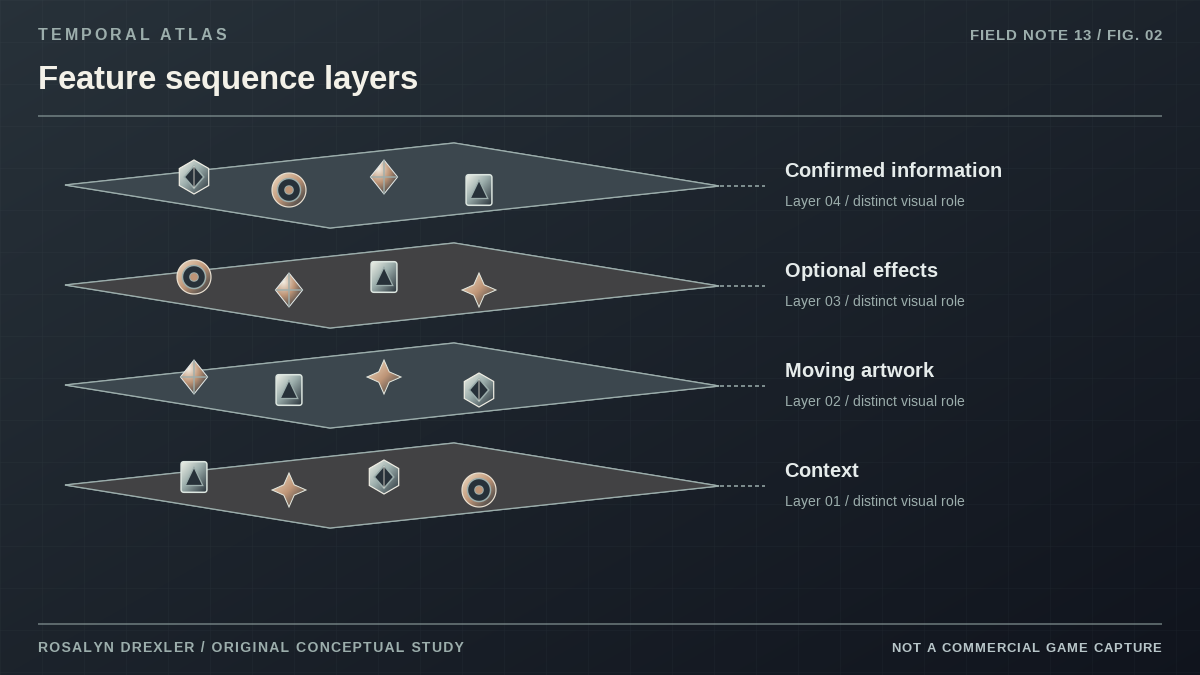
A practical flow document maps each phase to visible content, control availability, confirmed data and alternative presentation. It also identifies exceptional conditions such as an interrupted animation or unavailable response. The five persistent UI components are described separately in free spins bonus UI design.
A feature-level information map. Divide the sequence into documented contextual phases before adding motion references. For each phase, write a short description of the information the user needs to interpret the current presentation. An entry phase may need the feature identity and applicable conditions. An active phase may need a persistent contextual label. A review phase may need the scope of established financial information. An exit phase may need a clear distinction between the completed context and a subsequent interface environment. These descriptions should correspond to the approved product information rather than the decorative appearance of each screen.
A useful map also distinguishes information that persists across phases from information that belongs to one specific context. A remaining count, an established intermediate value and a complete financial summary should not be treated as interchangeable merely because they occupy the same visual panel. If a context-specific label is replaced, record which established information remains available elsewhere. This helps prevent an outgoing visual treatment from leaving behind a value that appears to describe the wrong state.
The map can include an exception column for unresolved information or interrupted presentation. An ordinary animation path may be fully documented while exceptional conditions remain ambiguous. The specification should state the expected informational behavior when a decorative sequence is unavailable. If the actual system state is unresolved, an explicit status should remain available rather than infer completion from the position of an animation. The diagram becomes a shared reference for motion, interface and engineering teams.
Timing animations and pauses
Timing decisions should be evaluated according to the amount of information being communicated and the actual display environment. A pause, movement or transition can change the perceived hierarchy of a composition, but essential information should not be available only during a transient phase. No single duration is suitable for every type of content or supported device.
Animation duration, skip options and clarity
Animation duration. Distinguish a required state change from optional decorative treatment. A motion specification may document the intended sequence and visual phases, but actual durations should be verified in the implementation. A complex animation does not establish that its associated information is more important. Inspect recorded states to identify any obscured labels or ambiguous object boundaries.
Information availability. A value that appears during a brief animation should remain available after that animation if it is necessary to understand the outcome. The duration of visual emphasis and the duration of information availability are separate design properties. An interface can retain a concise status message while simplifying the surrounding decorative presentation.
Pauses. A pause may provide an opportunity to inspect the current arrangement. It should not introduce artificial urgency or imply an unsupported future outcome. If the system is waiting for information, communicate that actual condition rather than use a decorative pause as a substitute. A stable layout can make the established state understandable without requiring a specific reading interval.
Skip behavior. Where supported, a control for skipping decorative animation should identify the presentation being skipped. It must not silently confirm a financially consequential action or conceal an unresolved result. The subsequent screen should reflect the actual established state. Review keyboard access, focus and consistency with reduced-motion settings. The product's documented behavior determines whether a sequence can be interrupted or dismissed.
Audio coordination. A sound associated with a visual transition should communicate a compatible state. Muting sound should not remove essential context. If several events overlap, inspect whether the result information remains understandable. Measure actual audio and visual synchronization before making technical claims.
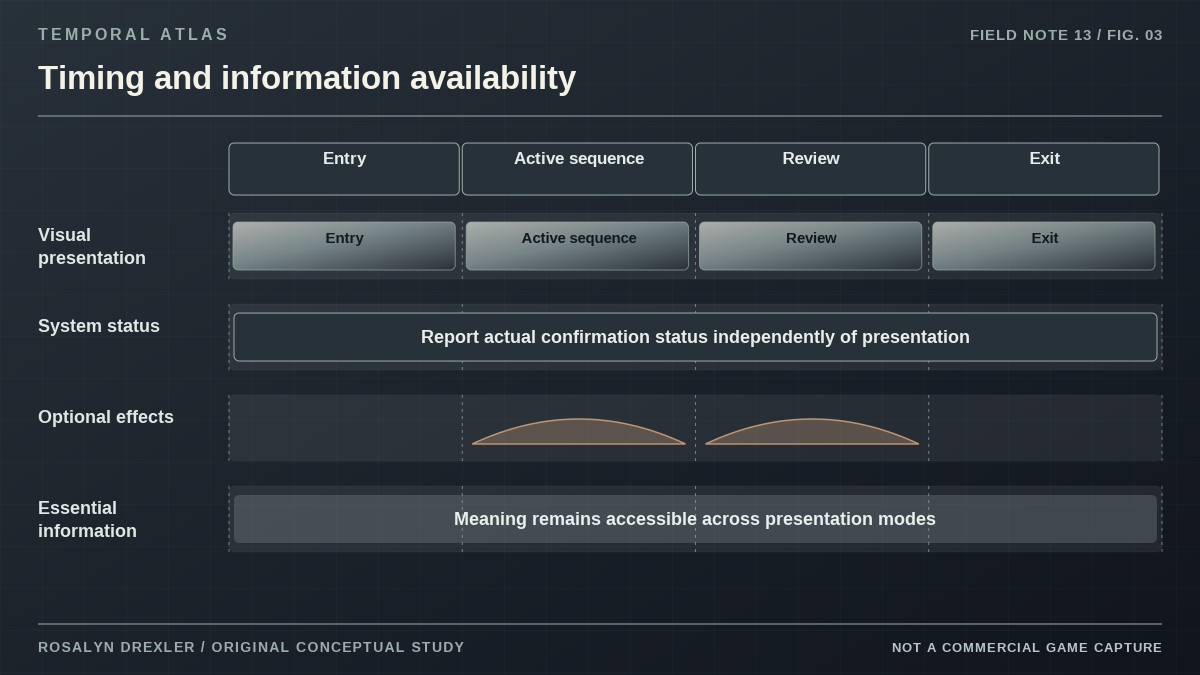
A useful motion review uses a qualitative phase diagram. Draw separate tracks for visual presentation, confirmation status, contextual information and complete financial data. Mark measured time only when actual recorded evidence is available. This method helps identify gaps without inventing animation benchmarks.
A qualitative timing worksheet. Represent the visual sequence, actual confirmation status, persistent contextual information and optional effects as separate tracks. Instead of assigning invented durations, label the phases according to the information they display. A particular animation may overlap several documented information states, and a confirmed value may become available independently of its decorative presentation. The worksheet should preserve these distinctions. If measured recordings later become available, annotate the actual observed durations and the conditions under which they were recorded.
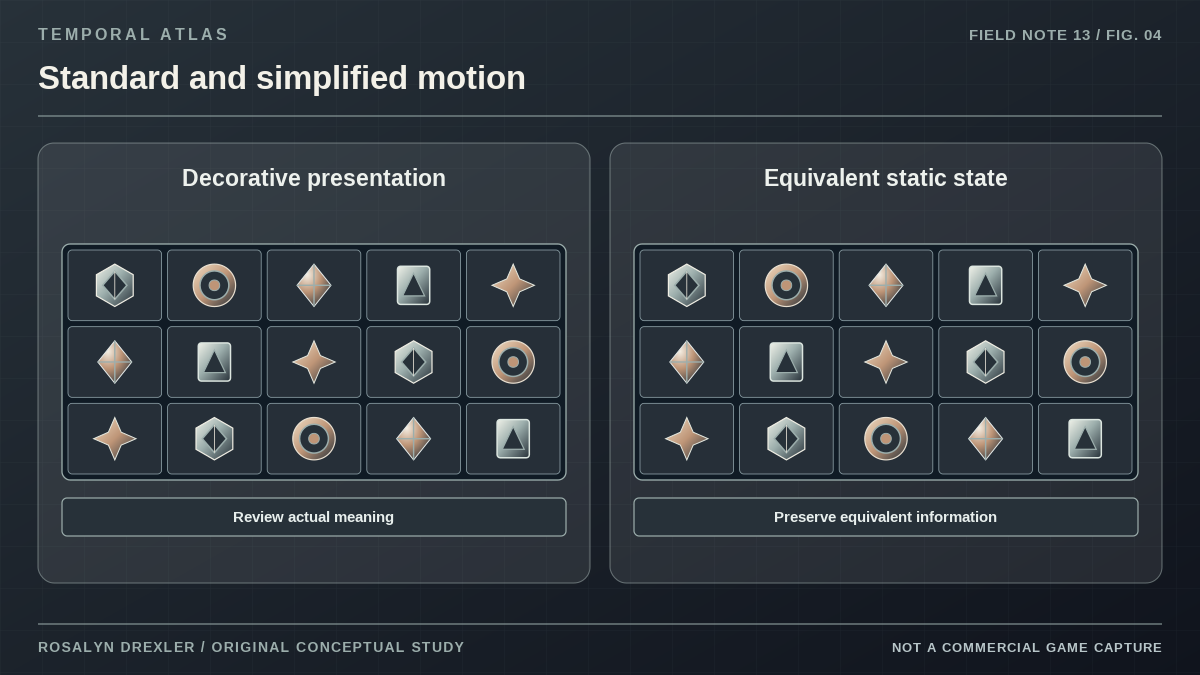
Consider an illustrative feature summary that appears after a changing composition. The decorative transition may be brief, but the established financial information should remain available independently of that duration. A review should compare the ordinary presentation with the same state after optional motion has been simplified. The essential labels and values must retain their meaning. If an important condition is visible only in a temporary transition, revise the information architecture rather than assume that a longer decorative pause alone resolves the problem.
Review controls as part of the sequence. A skip or dismiss control has a specific scope. It may affect only the decorative presentation, while the underlying established information remains unchanged. The interface should explain that scope and reflect the documented product behavior. Test the state after the control is used, not just the appearance of the control itself. A control that looks understandable in isolation may become ambiguous when it appears alongside a financial confirmation or an unresolved message. Record the actual interaction and the resulting system information when reviewing it.
The sequence should also be inspected with alternate presentation settings and interruptions. A shorter decorative rendering does not necessarily mean that system information becomes available sooner. Conversely, a delayed visual effect does not necessarily mean that an established result is unavailable. Keeping these conditions separate helps the production team avoid using animation phase as a substitute for the actual status contract.
Designing pacing across mobile and desktop
Desktop and mobile presentations may use different spatial arrangements, yet the feature-state meanings should remain equivalent. A portrait viewport may place contextual counters and reference information differently from a landscape screen. The goal is not to reproduce every visual effect at the same scale. It is to preserve recognizable artwork and essential information when the environment changes.
Responsive sequencing. Inspect how entry descriptions, persistent feature information, changing objects and the final summary coexist in each supported layout. Longer localized text and larger financial values should remain readable. Avoid compressing the complete desktop composition into a smaller region if the association between labels and values becomes unclear.
Alternative presentation. A reduced-motion mode should provide equivalent established information without requiring the full decorative sequence. Test whether static symbols, explicit labels and stable summaries communicate the same context. Muted audio should preserve equivalent visual or accessible information. Do not infer accessibility compliance from a conceptual storyboard.
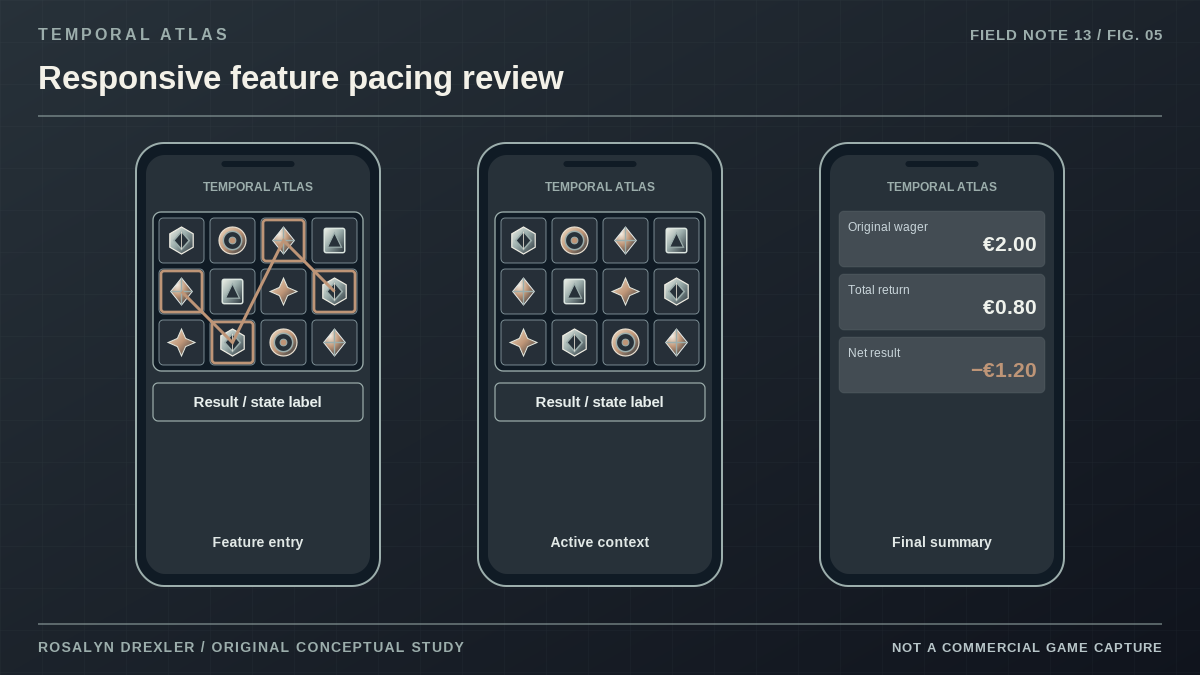
Recovery. Review orientation changes, backgrounding, connection interruption and incomplete rendering. An interrupted decorative animation should not alter an established result. An unresolved request should remain explicitly unresolved. Document the actual system contract so the visual recovery behavior can be tested consistently.
Evidence and handoff. Record client version, device, viewport, language, supported settings, state and relevant captures. Distinguish measured animation timing from qualitative design intent. A handoff should include the feature-state map, content definitions, visual sequence references, control behavior and accessibility alternatives. These materials make it possible to evaluate the complete sequence rather than approve individual effects in isolation.
Cross-device evidence example. Capture the same documented feature phase in a representative desktop layout and a supported portrait layout. Preserve the applicable data and terminology. Compare the location and readability of contextual labels, reference access and financial information. Then inspect a later phase and an interrupted condition on both devices. If a label disappears only in the portrait layout during a transition, record the exact overlap or clipping behavior rather than assume the entire sequence needs a different pacing specification.
A practical acceptance matrix can include rows for entry, ordinary active presentation, changed context, summary, exit and recovery. Columns can identify the available controls, established information, optional visual treatment, audio alternative and required evidence. Mark any unsupported condition explicitly. This prevents a successful review of one visually attractive state from being treated as approval of the entire sequence.
The resulting handoff should distinguish art intent, implemented behavior and measured observations. A motion reference can describe the intended visual relationship between phases, but it is not a performance recording. A design requirement can identify information that must remain available, but its satisfaction should be tested in the implemented client. Preserve these distinctions when documenting revisions. A more coherent feature sequence is one whose actual information remains understandable across supported conditions, not simply one whose decorative timing appears consistent in a presentation video.
Effective slot bonus round pacing connects entry, active presentation, information review and exit through consistent state communication. It preserves accurate financial meaning and access to essential information across ordinary, simplified and interrupted conditions. The artistic timing of the feature is valuable only when it remains compatible with that informational architecture.
Practical design QA checklist
Use this checklist as a review framework; it does not certify accessibility, performance or compliance.