Plinko game UI animation design combines spatial interface composition, moving-object presentation, numerical information, and outcome feedback within a single visual environment. Unlike reel-based games, where the main display is organized around changing symbol arrangements, a Plinko-style interface typically presents a moving object within a triangular board containing fixed graphical obstacles and a series of landing regions. This creates a distinctive motion-design challenge. The interface needs to maintain recognizable spatial references while communicating the movement of an object and its eventual established result.
The surrounding controls, financial labels, contextual information, and decorative effects introduce additional requirements for visual hierarchy. An elaborate trajectory animation may appear physically convincing while remaining difficult to follow on smaller displays. Similarly, a prominent landing effect may obscure the distinction between a graphical event and a confirmed financial outcome. Effective design therefore depends on the relationship between board clarity, motion readability, accessible presentation, and accurate result communication.
This article examines representative interface states using the original fictional visual concept Kinetic Gallery, inspired by precision-engineered objects, brushed titanium, translucent glass, and contemporary kinetic sculpture. The illustrations are conceptual pattern studies rather than screenshots of a particular Plinko product. They do not represent a physical simulation, probability model, or playable game.
Board layout and control hierarchy
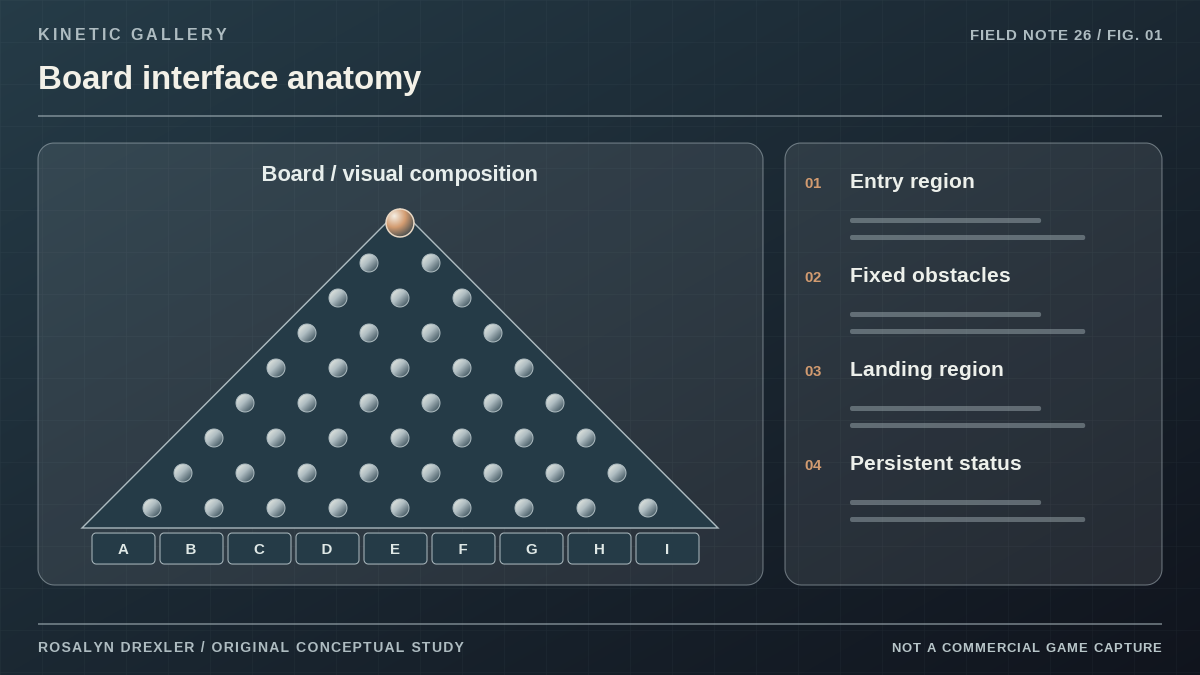
The board establishes the primary spatial structure of a Plinko interface. Its composition usually includes an upper entry region, a triangular arrangement of obstacles, and a lower region containing potential landing positions. These components establish a recognizable visual relationship between the beginning, continuation, and conclusion of an object's displayed movement.
However, the board is only one part of the complete interface. Financial information, configuration settings, contextual descriptions, and supporting controls also require dedicated visual space. A useful design specification distinguishes these functional regions before introducing decorative artwork. This separation helps ensure that the movement area remains identifiable without making essential information dependent on the board's artistic treatment.
Bet inputs, drop-zone framing and responsive labels
Financial inputs and contextual information. Financial input components should communicate the meaning of their current values and distinguish editable settings from established transactions. A displayed amount may represent a configuration value, an original wager, a confirmed return, or an account balance. These quantities serve different informational purposes and should not be presented under ambiguous labels. Changing an editable value should remain distinguishable from submitting a financially consequential action. If transaction information is unresolved, the interface should communicate that condition explicitly rather than relying on the appearance or movement of an object.
Drop-zone framing. The upper entry region provides a spatial reference for interpreting the beginning of the displayed trajectory. Its relationship to the surrounding board should remain recognizable across different interface dimensions. Decorative framing may establish the visual identity of the composition, but it should not imply that an entry position provides predictive information about the eventual result. The board's geometry should be understood as part of its visual architecture rather than evidence of a particular financial outcome.
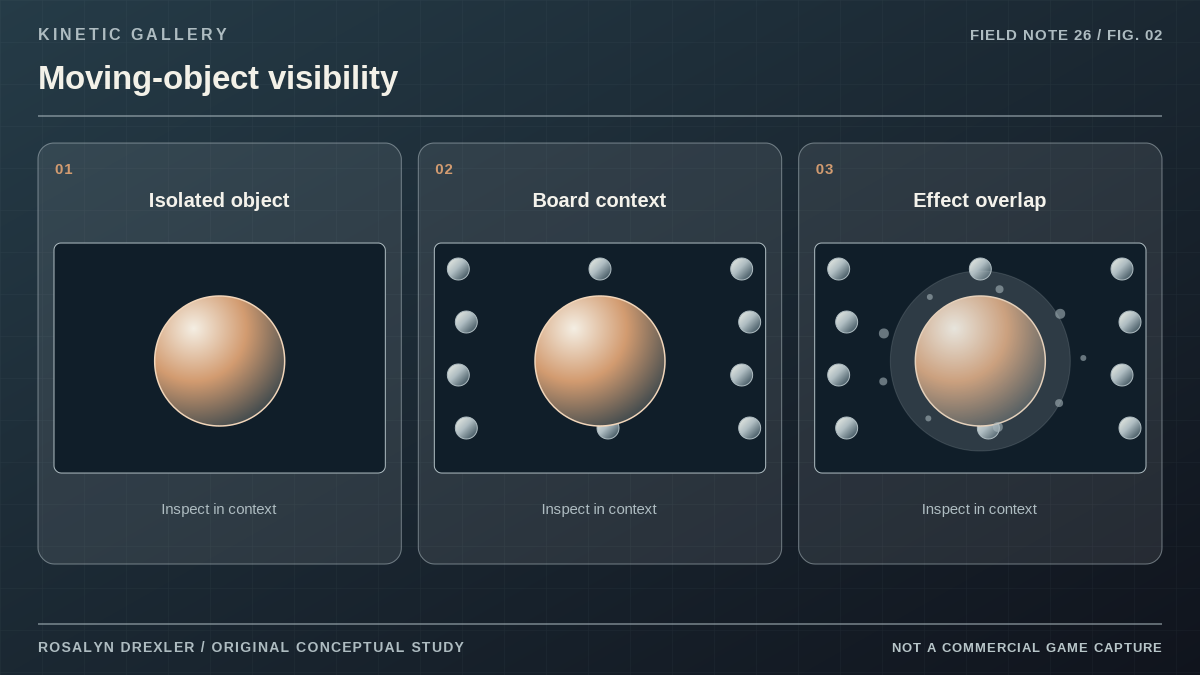
Obstacle visibility and visual structure. The fixed objects within the board establish a repeating spatial pattern. Their appearance should remain distinguishable from the background and from the moving object. If the board uses reflective materials, strong illumination, or detailed environmental artwork, these treatments should not make fixed objects appear to move or introduce ambiguous visual boundaries. The moving object and the stationary structure serve different informational roles. Their graphical identities should preserve this distinction throughout the presentation.
Responsive labels and smaller displays. A desktop interface may accommodate the board and contextual information in adjacent regions. Portrait-oriented mobile layouts introduce different spatial constraints. The board's width, obstacle visibility, landing labels, and financial information must be evaluated within the available viewport. Simply reducing the complete desktop composition may produce text that is difficult to read or graphical elements that become visually indistinguishable. Longer localized labels and enlarged text can introduce additional layout requirements. The responsive specification should identify which content relationships must be preserved when components are rearranged. For a broader discussion of these requirements, see Mobile Slot Game UX: Designing for Small Screens.
Animation of visible ball trajectories
The moving object is the principal animated element within a Plinko-style presentation. Its appearance establishes a relationship between the fixed board structure and the eventual landing region. From a motion-design perspective, the important question is whether the displayed object remains visually identifiable throughout the sequence. This article does not examine how the trajectory is calculated. Physics simulation, collision modeling, and outcome-generation logic belong to separate technical disciplines. The analysis instead considers the presentation of an already defined movement sequence and its relationship to interface information.
Tracking readability, timing and mobile performance
Tracking readability. Tracking readability describes the ability to identify a moving graphical object within its surrounding visual environment. An object's visibility can be affected by its dimensions, contrast, background complexity, decorative illumination, and overlap with other elements. A moving sphere with a reflective surface, for example, may temporarily resemble nearby stationary objects if both use similar materials and lighting. An analytical review should examine the moving object against representative board regions rather than only against an isolated background. Visual references such as consistent object shape and distinguishable boundaries can support recognition without introducing predictive information about the movement.
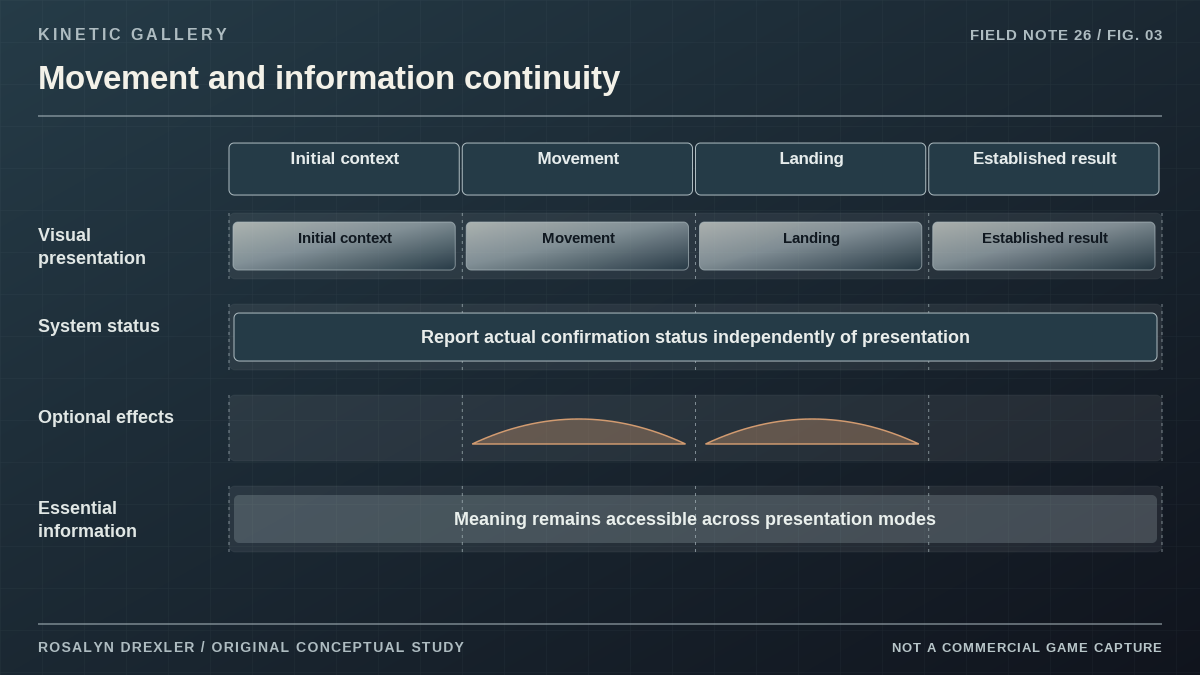
Timing and informational continuity. The duration of a visible movement sequence should be considered separately from the confirmation status of its associated result. An object may still be moving while certain information remains unresolved. Alternatively, the underlying system may have established information before its decorative presentation has concluded. These conditions should not be treated as interchangeable. A visual animation is a representation of information. It is not independently sufficient evidence that a financial transaction has completed. The interface should preserve accurate status information throughout the presentation, including situations where the animation is interrupted. There is no universal animation duration that establishes readability across all display environments. Timing assessments require recorded evidence and representative testing conditions.
Distinguishing movement from anticipation. A visible trajectory naturally introduces a period during which the final graphical position has not yet been presented. Decorative movement should not suggest that an uncertain or unresolved outcome has become more favorable simply because the object appears near a particular landing region. Additional illumination, sound, or temporary emphasis should remain consistent with established information. Related concerns about misleading anticipation cues are examined in Anticipation Animations in Slot Games.
Mobile performance. Animation performance can vary with device capabilities, rendering environments, graphical complexity, and other technical conditions. A motion-design review should distinguish problems affecting the visible animation from problems affecting the availability of confirmed system information. For example, a visual interruption caused by an application moving into the background should not automatically change an established financial result. Similarly, an interrupted network connection should not be concealed behind an ordinary decorative movement sequence. Relevant technical review areas include frame consistency, object visibility, resource consumption, orientation changes, and recovery after application interruptions. No numerical frame-rate or latency benchmarks are assigned in this pattern study because representative device testing has not been performed.
Accessible outcome feedback
The landing presentation establishes the visible conclusion of the moving object's displayed trajectory. At this point, the interface needs to distinguish the graphical endpoint from the confirmed result and its financial meaning. A landing region may communicate an established classification, but the appearance of that region should not independently imply a net gain. Outcome feedback therefore requires coordination between the board, the contextual result indicator, and the financial summary.
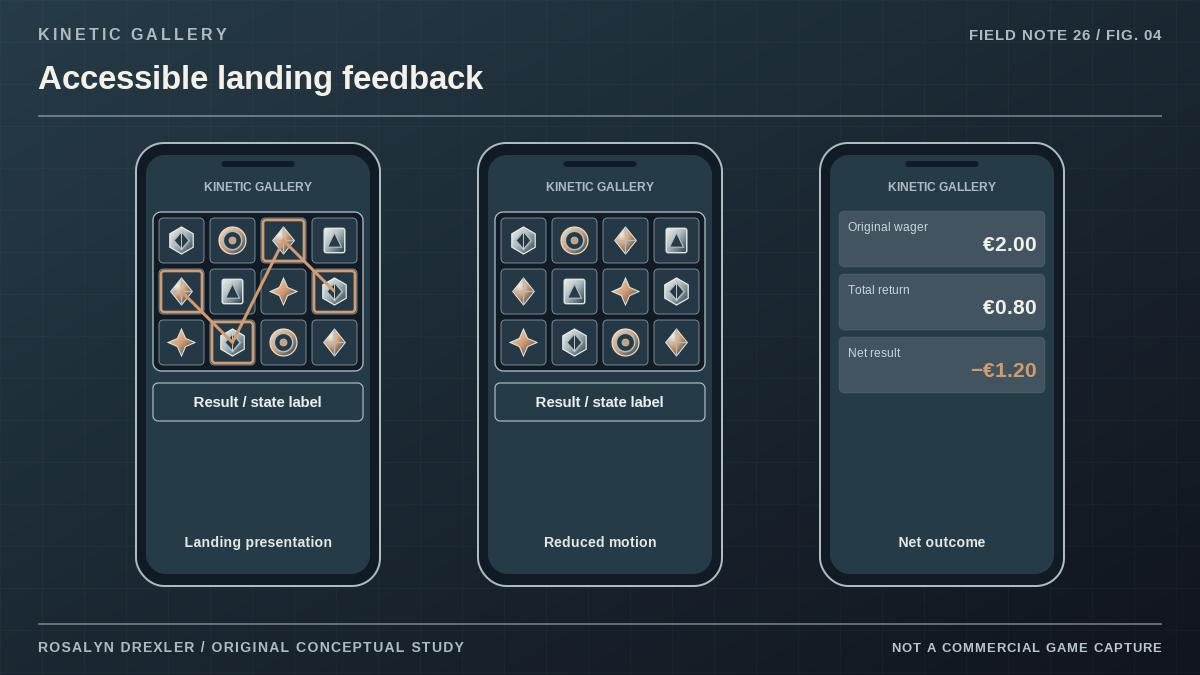
Landing highlight, clear result state and reduced motion
Landing highlights. A landing highlight identifies the displayed endpoint of an object. Its graphical treatment should remain distinguishable from the ordinary appearance of neighboring landing regions. Explicit identifiers, stable outlines, and accompanying text can provide alternatives to color-dependent communication. The highlighted region should remain identifiable without requiring users to interpret temporary decorative effects. A review should also examine whether adjacent regions appear incorrectly emphasized when graphical effects overlap.
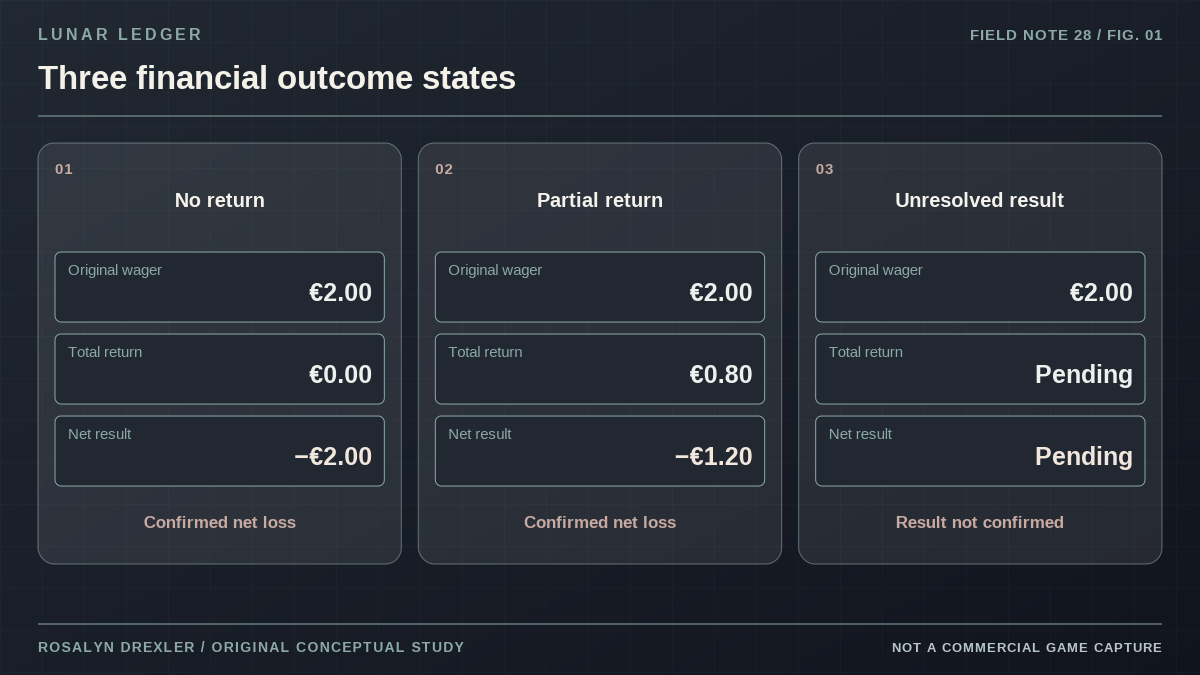
Clear financial result states. A result summary should communicate the financial meaning of the complete round rather than only displaying a returned amount. For example, an original wager of €2.00 and a total return of €1.40 produce a net loss of €0.60. Although the round includes a returned amount, it has not produced a net financial gain. The visual and audio presentation should not contradict this distinction. Relevant quantities should have explicit labels, and unresolved information should remain distinguishable from confirmed values. The broader treatment of negative outcomes is discussed in Non-Winning Spin Feedback Design.
Reduced-motion alternatives. A reduced-motion presentation should preserve essential information without requiring the full animated trajectory. The displayed endpoint, confirmation status, and financial summary should remain available in an equivalent static or simplified representation. Decorative particles, continuous movement, camera effects, and transitional illumination may be treated separately from information-bearing components. A user should not need to watch a complete animated sequence to understand an already established result.
Audio alternatives and accessibility review. Landing audio may contribute to the visual identity of a presentation, particularly when the artwork suggests metallic, ceramic, or glass materials. However, sound should not be the exclusive means of communicating the endpoint or confirmed financial outcome. Visual labels and accessible status information should preserve equivalent meaning when audio is disabled. A comprehensive review should also consider keyboard interaction, text scaling, color-independent identifiers, readable contrast, and compatible assistive technologies. These requirements should be evaluated within the actual implementation rather than inferred from static artwork.
Ultimately, effective Plinko game UI animation design depends on maintaining clear distinctions between spatial presentation, moving objects, graphical landing states, and established financial information. Board composition, motion readability, responsive layouts, and accessible alternatives should be evaluated as interconnected components of the same information system. A visually sophisticated trajectory is not sufficient on its own. The complete interface must communicate uncertainty, confirmation status, and financial meaning accurately, including when decorative animation is unavailable.
Practical design QA checklist
Use this checklist as a review framework; it does not certify accessibility, performance or compliance.