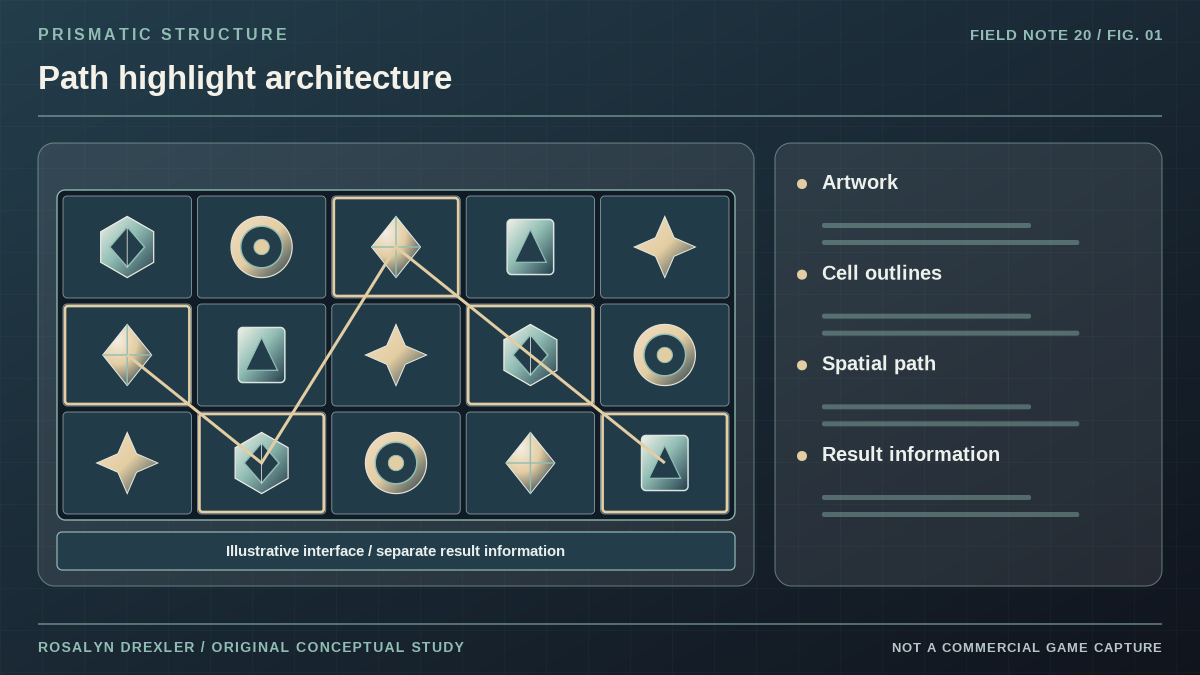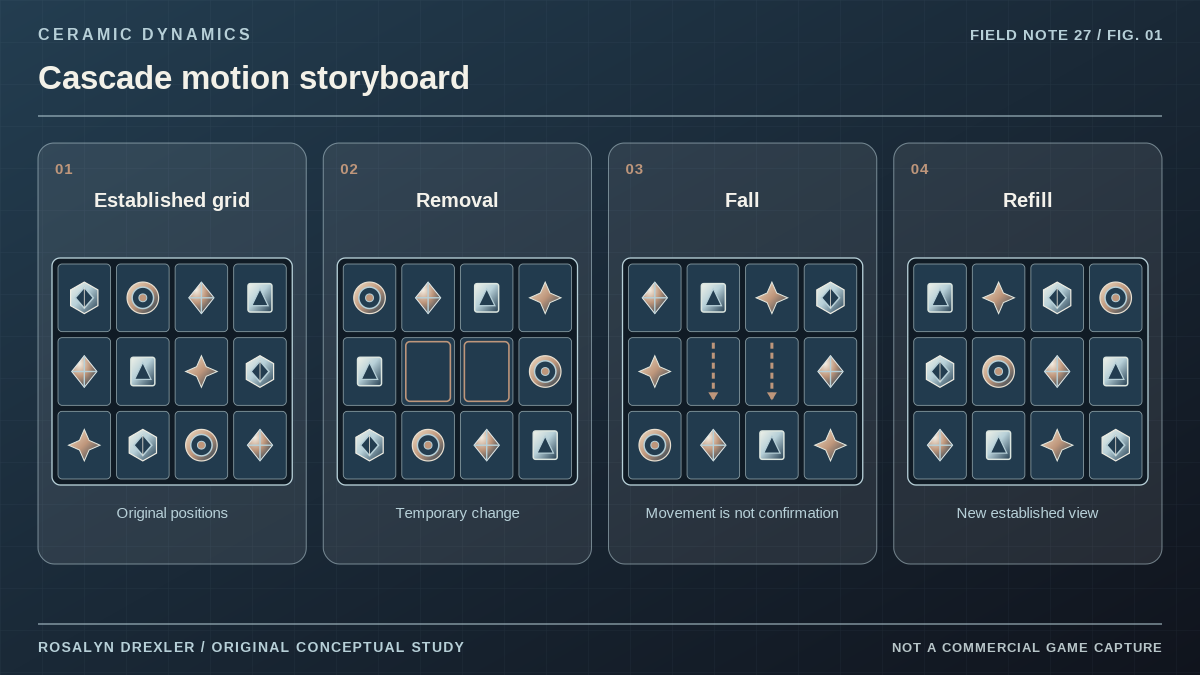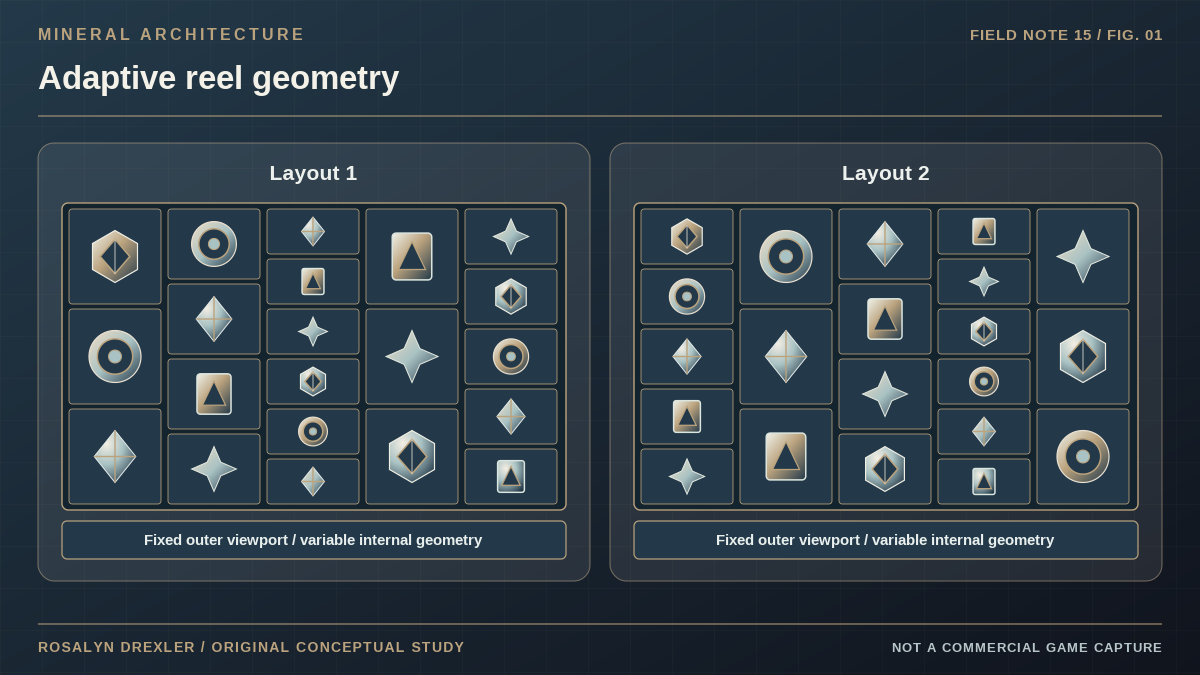
Megaways slot UI design introduces a responsive spatial problem: the number and dimensions of visible objects can vary within a reel-based arrangement. The design challenge is preserving alignment, recognizable artwork and readable contextual information as the display changes. This article examines adaptive geometry and visual feedback, not the financial rules associated with the format. The original Mineral Architecture illustrations demonstrate possible layout constraints rather than reproduce a licensed product.
Designing adaptive reel grids
A variable-height reel region requires a documented relationship between the outer viewport, individual columns and the rendered object canvases. Stable framing can provide a continuous spatial reference even when internal geometry changes. The layout should preserve the identities of objects and the association between contextual information and its relevant arrangement.
Variable reel heights, alignment and responsive sizing
Variable reel heights. Different column arrangements can introduce different available cell dimensions. A design system should identify the supported artwork canvas, alignment requirements and permitted responsive behavior. Avoid changing the recognizable shape of an object merely to fill a variable area. Maintain consistent material treatment and functional identifiers. A fixed external boundary can help distinguish the active display from surrounding information.
Alignment. Inspect the actual geometry of neighboring columns. Different object heights should not make unrelated positions appear associated with one another. Document how borders, spacing and clipping behave at each supported layout. The frame should remain distinguishable from changing objects and decorative effects. The original grid studies show conceptual arrangements, not an implementation specification for a particular game.
Responsive sizing. A portrait viewport may reduce the space available to variable-height columns. Inspect the smallest supported object and its associated labels. If the desktop composition does not fit, reorganize contextual information rather than scale all content proportionally. For general portrait layout and safe-area considerations, see mobile slot game UX design.
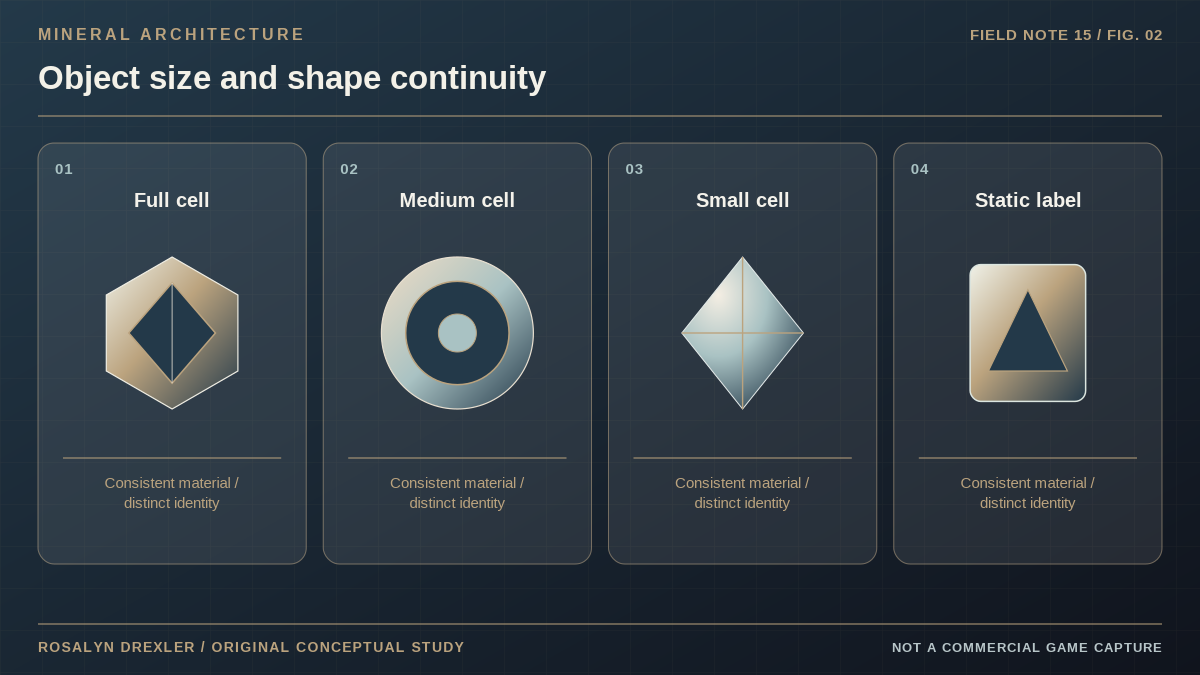
A geometry specification for variable arrangements. Define the outer display boundary, the supported column arrangements and the relationship between the artwork canvas and the available cell dimensions. A uniform source canvas does not necessarily mean that every object has the same perceived size. Different silhouettes and internal padding can produce different visual relationships when placed in cells of varying dimensions. Record the alignment and clipping requirements independently of the decorative material treatment.
For an analytical review, compare two representative layouts with the same visual vocabulary. Inspect the smallest cell, the largest cell and the boundary between neighboring columns. Check whether the same object remains recognizable and whether its state indicator retains the correct association. The original Mineral Architecture diagrams demonstrate these geometric questions without specifying a game outcome algorithm. Actual supported arrangements and object sizes must be established from approved implementation requirements.
Visualizing changing screen states
A changing layout can communicate both a new spatial arrangement and a contextual numerical condition. These are different information categories. The interface should distinguish an established arrangement from temporary movement and identify the scope of any associated count. A graphical transition should not be treated as evidence that a financial result has been confirmed.
Counters, animations and information hierarchy
Counters. A contextual count should have an explicit label and reflect the actual established condition. It should not imply a particular financial outcome or be presented as a guaranteed future return. If a numerical display changes during a decorative transition, its stable value should remain readable after the animation concludes.
Animations. Motion specifications should preserve recognizable object identities and distinguish persistent boundaries from changing artwork. A temporary arrangement may be incomplete; it should not be mistaken for a confirmed result. A reduced-motion alternative must preserve essential state information. See cascading reels animation design for general spatial transition principles.
Information hierarchy. Inspect the relationships between the variable geometry, contextual indicators, financial labels and reference navigation. Visual emphasis should correspond to the actual information. A highlight describing a symbol relationship does not independently communicate a net financial gain. The distinction is developed in slot win visualization design.
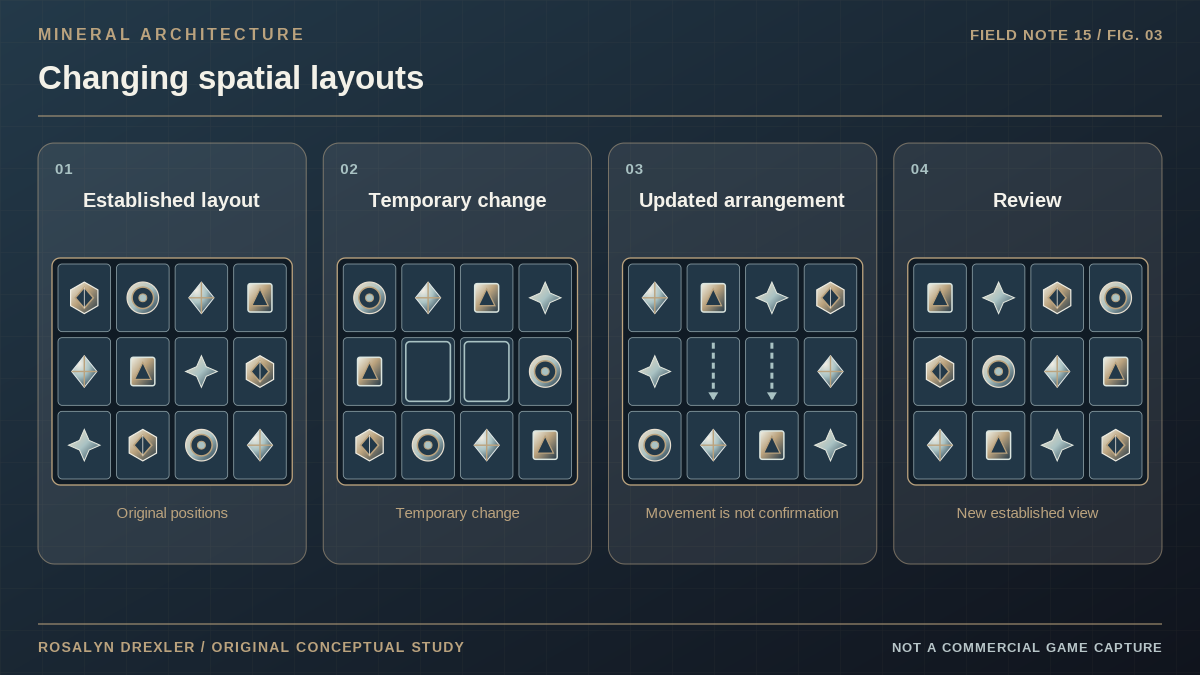
Document contextual updates separately from geometry. A changing arrangement may be accompanied by a contextual numerical display. The layout specification should establish the visual relationship between that display and the information it describes. Its label should not become ambiguous when the internal geometry changes. If the system information remains unresolved, the interface should identify that condition rather than derive a definitive value from the appearance of the animation.
A useful review contains an ordinary arrangement, a temporary changing presentation and a subsequent established layout. Preserve the actual status information in the record. Inspect whether the changing objects obscure the contextual indicator or whether a decorative highlight appears to include unrelated cells. The solution may concern the layout boundary, the visual identifier or the information label; these are different design responsibilities. A recorded comparison makes the underlying problem easier to identify than a single final screenshot.
UI readability and mobile QA
A representative QA set should include several supported arrangements, the smallest object dimensions, changing geometry, longer localized labels, alternate display settings and interrupted presentation. Evaluate the actual implementation rather than infer performance from a concept image. A static mockup cannot establish whether changing layouts preserve correct information under runtime conditions.
Visual noise, tap targets and state consistency
Visual noise. Detailed artwork may become difficult to recognize when many small objects share the same display region. Inspect contours, contrast and separation from background effects at actual dimensions. A visually rich theme can remain coherent if functional identifiers and stable boundaries are distinct. Compare the same information with optional effects simplified.
Tap targets. The variable display should not obscure or move essential controls into ambiguous interactive regions. Verify actual touch boundaries, focus indicators, accessible names and navigation order. A visible icon and its interactive area may have different dimensions. Reference information should remain accessible across supported arrangements.
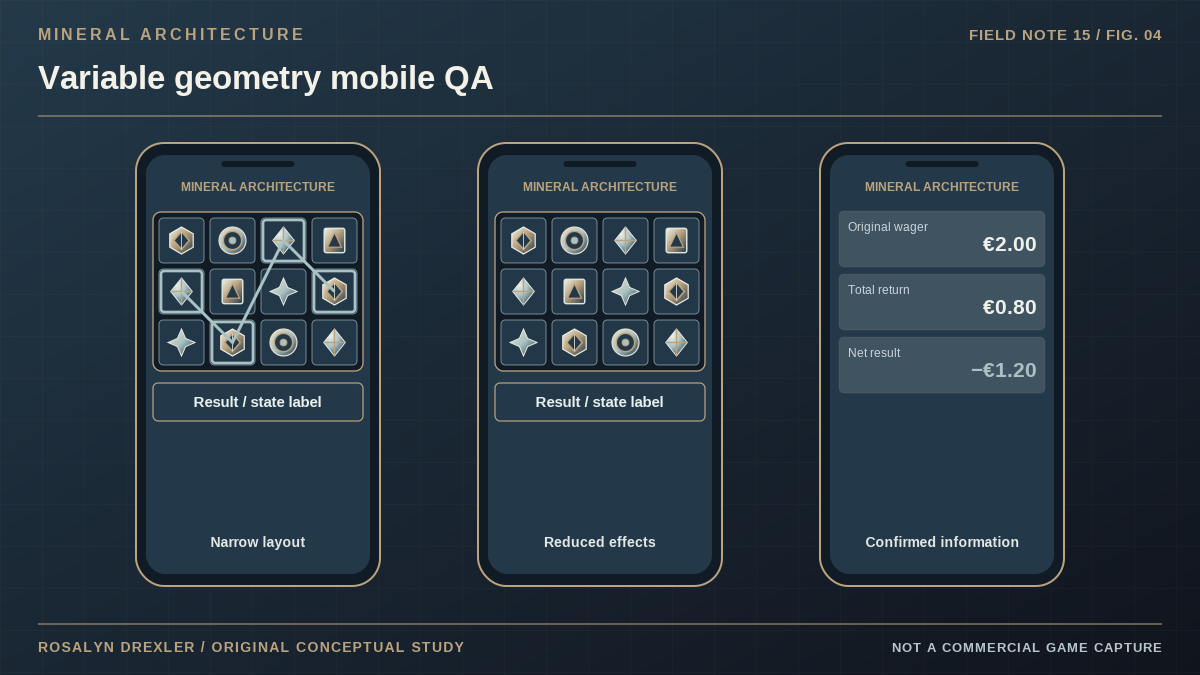
State consistency. Test interrupted transitions, orientation changes and application recovery. The subsequent composition must correspond to established system information. If a result remains unresolved, the interface should communicate that status. Record the actual viewport, state, settings and supporting evidence when reporting a discrepancy.
Responsive acceptance example. Prepare a test set that includes the supported internal geometry variations on representative landscape and portrait viewports. For each condition, inspect symbol recognition, the visibility of contextual labels and the availability of reference information. Include longer localized text and supported alternative presentation settings. A composition that remains visually coherent at one column arrangement may introduce clipping or an ambiguous label at another arrangement.
Record the actual conditions under which an issue occurs. For example, a particular object may remain recognizable in a larger cell but lose its functional identifier in a smaller one. That issue belongs to the artwork and rendering constraints rather than necessarily to the entire grid layout. Another issue may concern a persistent label that becomes overlapped by moving objects. That requires an inspection of the display boundary and surrounding information architecture.
Test an interrupted presentation and orientation change. The recovered layout should reflect the actual established system information. A temporary graphical arrangement should not be presented as a definitive outcome. The handoff should identify the supported geometry, artwork requirements, contextual data definitions and exceptional-state behavior so that the same conditions can be reviewed after revisions. This makes the responsive system testable without claiming that an illustrative layout establishes real-world performance.
Effective Megaways slot UI design preserves recognizable spatial relationships while adapting to changing internal geometry. The central display, contextual counters and financial information should maintain their distinct meanings even when their visual dimensions change. The Mineral Architecture examples provide a conceptual design framework, not measurements or a financial mechanics explanation.
Practical design QA checklist
Use this checklist as a review framework; it does not certify accessibility, performance or compliance.