Slot game art direction establishes the creative framework connecting environmental illustrations, characters, symbols, interface styling, typography, and motion. Its purpose is to ensure that independently produced assets belong to a recognizable visual world while preserving their individual functional identities. A collection of visually impressive illustrations does not automatically constitute a coherent art system. Inconsistent lighting, conflicting perspectives, incompatible materials, and competing decorative treatments can weaken the relationship between artwork and interface information.
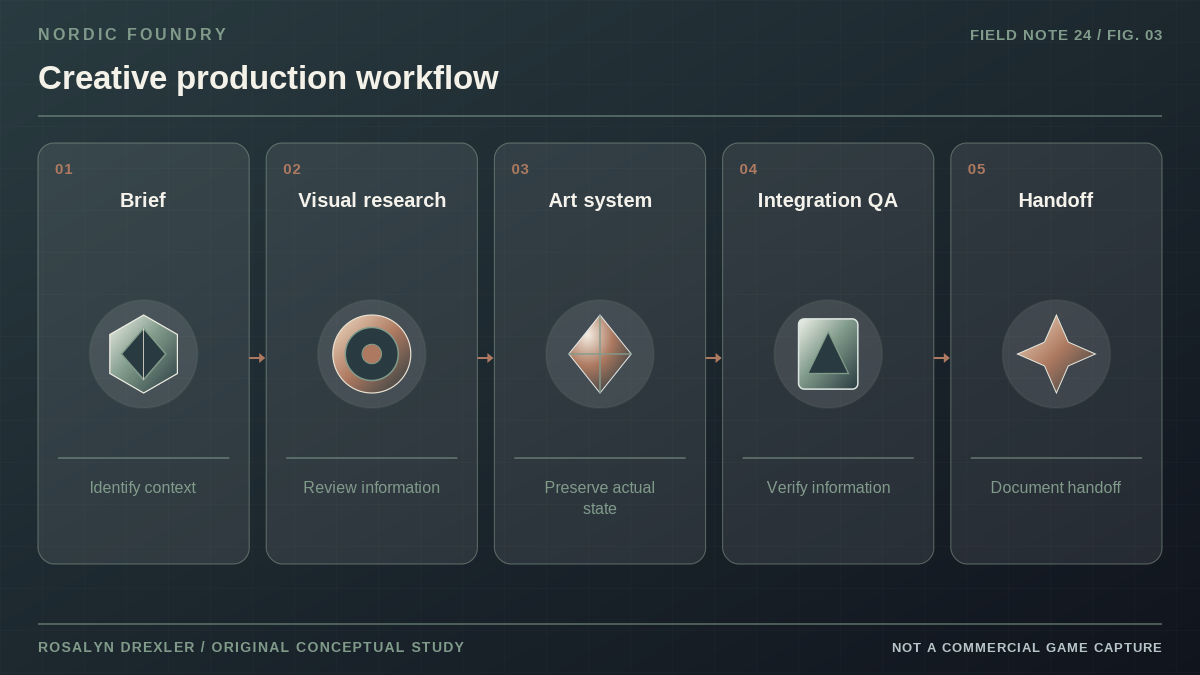
Effective art direction requires a documented creative process that connects visual research with production requirements. This guide examines the transition from creative brief to moodboard, the development of consistent visual systems, and the preparation of production-ready art documentation. All illustrated examples belong to the original fictional concept Nordic Foundry, inspired by Scandinavian architecture, carved stone, oxidized copper, and traditional craftsmanship.
From creative brief to art direction
The creative brief defines the intended visual identity, thematic boundaries, supported presentation environments, and production constraints. It should establish what the fictional world represents and identify the characteristics that distinguish it from other artistic directions. The brief also needs to consider functional requirements. Environmental artwork, characters, and decorative treatments must coexist with readable interface information.
Audience, references, moodboard and visual pillars
Audience and context. Audience research should identify relevant language requirements, device conditions, cultural considerations, and accessibility needs. These findings help establish an appropriate visual vocabulary without relying on assumptions about individual preferences.
Visual research. Reference collection can include architecture, historical objects, photography, traditional illustration, material samples, and typography. References should be selected for their specific artistic contribution rather than copied as complete commercial compositions.
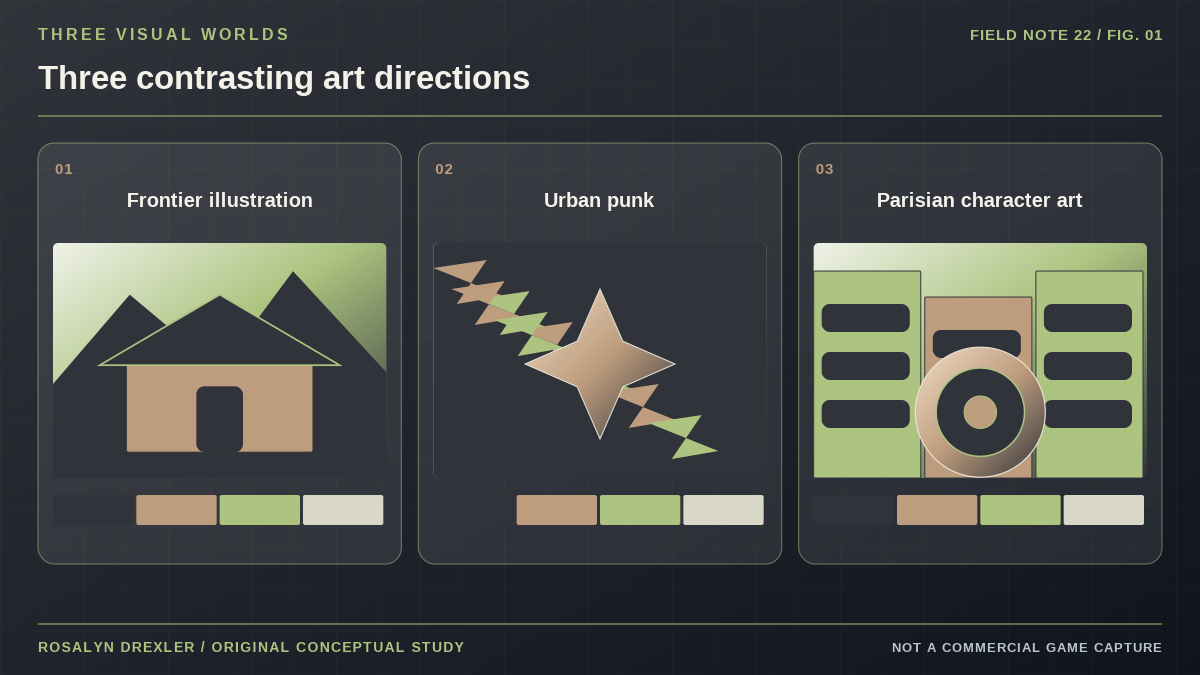
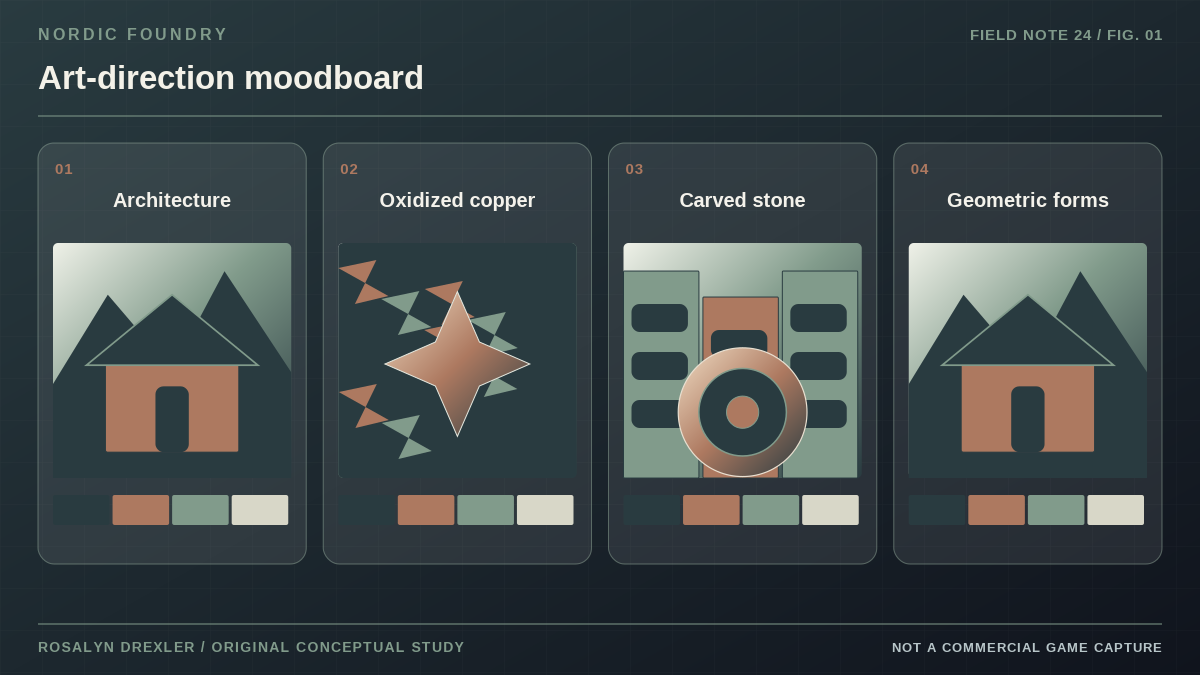
Moodboard and visual pillars. A moodboard translates research into an organized creative reference. It should establish relationships between materials, colors, shapes, lighting, and environmental atmosphere. Visual pillars then summarize these relationships into a manageable set of creative principles. For Nordic Foundry, the illustrative pillars are architectural geometry, tactile craftsmanship, restrained colors, and clear separation between decorative artwork and functional information. Comparing distinct thematic approaches can help teams understand the difference between a coherent artistic identity and a shared production discipline. This relationship is examined in Hacksaw Gaming Slot Art Direction: A Visual Study.
Designing a consistent art system
A moodboard establishes creative intent, but an art system translates that intent into repeatable production decisions. The system should document which characteristics remain consistent across assets and which can vary according to their individual functions.
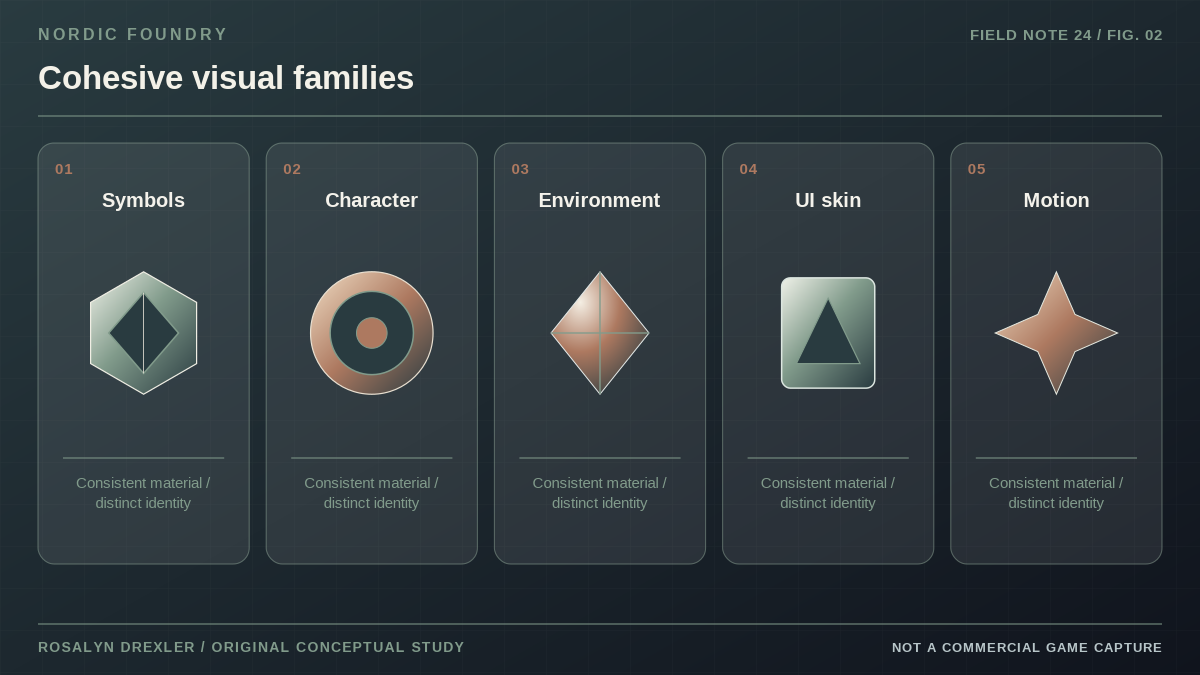
Symbols, characters, environments, UI skins and motion
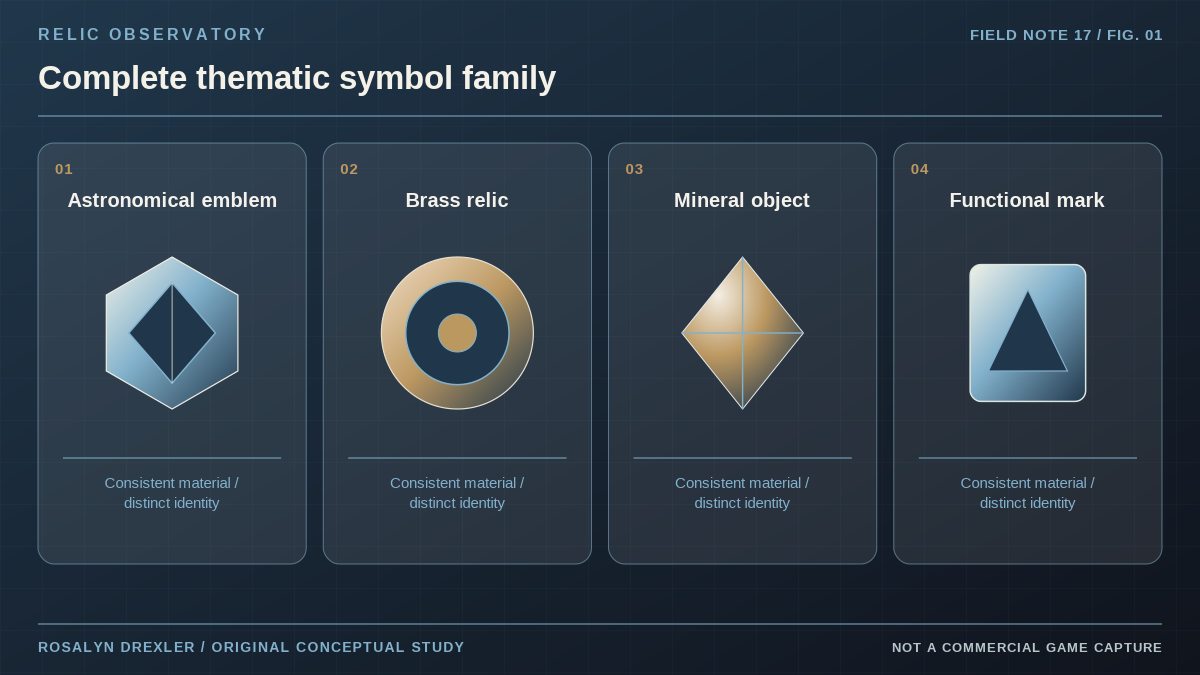
Symbols and shape language. Symbols should share recognizable artistic characteristics while retaining distinct silhouettes and functional identities. A common approach to perspective, lighting, edge treatment, and surface detail can connect different objects without making them visually interchangeable. Detailed symbol production principles are examined in Slot Game Symbol Design: A Practical Guide.
Characters and environments. Character artwork should establish consistent proportions, clothing conventions, and recognizable features. Environments should follow compatible architectural and material principles. For Nordic Foundry, a carved stone ornament, a craftsperson's portrait, and a timber workshop can belong to the same visual world through their shared material vocabulary and restrained lighting.
UI skins and color systems. Interface components can reflect the artistic theme through controlled material accents, borders, and typography. However, the functional appearance of information should not be sacrificed for thematic consistency. Essential labels, numerical values, and status indicators require independent readability criteria. Color systems should distinguish decorative colors from information-bearing colors. Their use should remain consistent across supported presentation states.
Motion consistency. Motion should preserve the recognizable properties of the static artwork. Transformations, lighting changes, and decorative effects should remain compatible with the established visual language. Information-bearing state indicators must remain distinguishable from optional effects. Simplified or reduced-motion alternatives should preserve essential meaning without requiring the full decorative presentation.
Production-ready art direction
A production-ready art direction needs to be understandable to contributors who were not involved in the initial creative exploration. Approved references must therefore be translated into documented requirements that can be applied consistently during illustration, technical art, interface design, and integration.
Style guides, asset QA and cross-team handoff
Style guides. A practical style guide records the project's visual pillars, approved references, color relationships, shape vocabulary, material treatments, lighting conventions, and typography. It should include positive examples and clearly identified inconsistencies. This helps contributors distinguish permitted artistic variation from deviations that require correction. The guide should also document the separation between decorative artwork and essential interface information.
Asset QA. Asset quality assurance examines both individual illustrations and their integrated presentation. An approved object may still introduce problems when exported, resized, placed against a different background, or combined with animated effects. Reviews should therefore consider actual display conditions, transparent boundaries, alignment, asset recognition, and consistency with the approved artistic specification.
Cross-team handoff. The handoff should identify approved assets, editable source files, exported versions, functional identifiers, and technical requirements. Versioning is particularly important when several disciplines contribute to the same interface. Changes to artwork or presentation states should be reflected in the relevant documentation. Art directors, UI designers, animators, technical artists, and developers should have a shared reference for resolving inconsistencies. The objective is to preserve the intended artistic identity throughout implementation rather than merely approve individual production files.
Ultimately, effective slot game art direction connects creative research with practical production discipline. A coherent visual world emerges when its symbols, environments, characters, interface components, and motion follow compatible artistic principles. Clear style guides, contextual asset reviews, and documented handoff requirements help maintain this coherence while preserving readable, accessible, and accurate interface information.
Practical design QA checklist
Use this checklist as a review framework; it does not certify accessibility, performance or compliance.